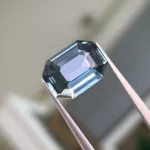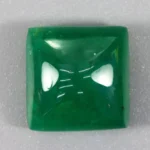

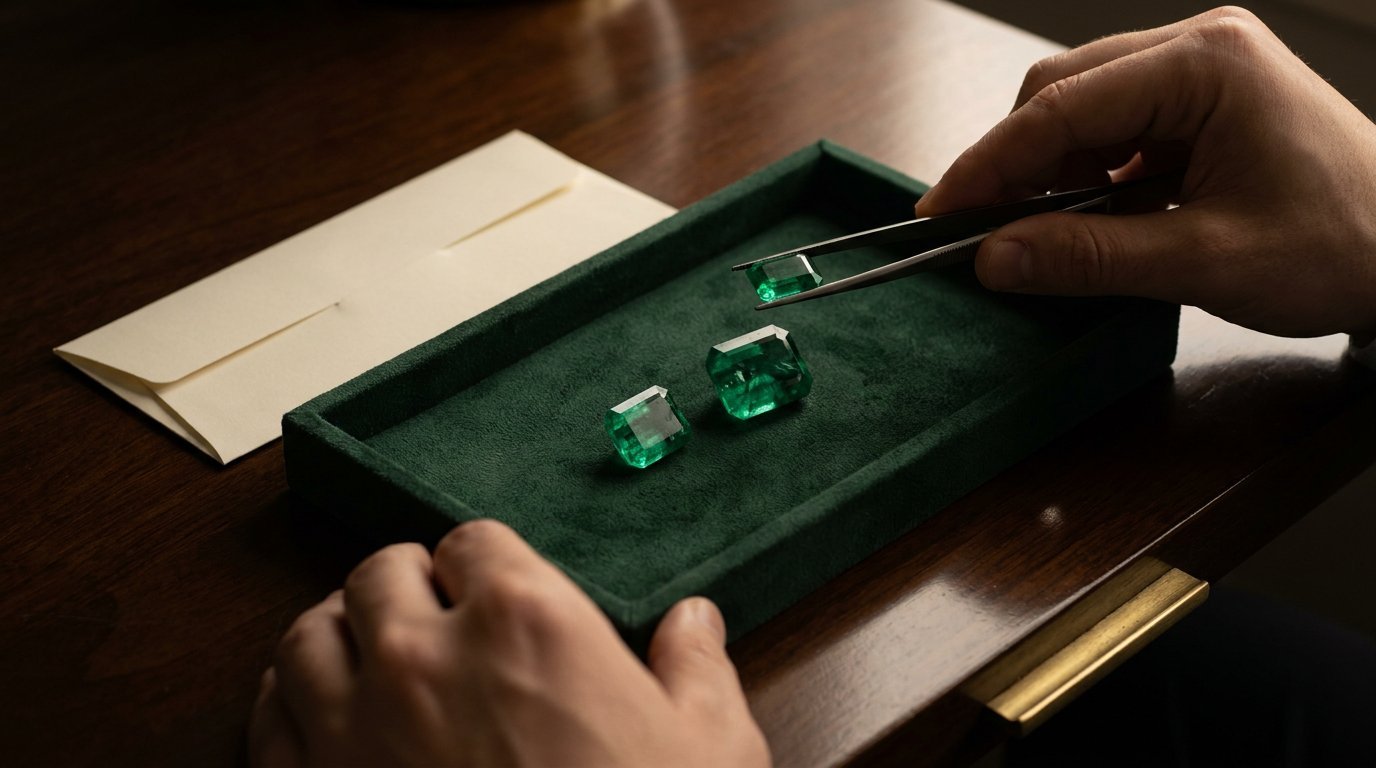

A certificate can clarify an emerald’s identity, but it cannot make its inclusions disappear. Some emeralds for sale come with laboratory reports, including reports associated with GRS, Guild, and Gübelin. Consider the document alongside the stone’s visible character.
It is natural to look for a clear report and a price that feels proportionate to the gem. Yet emeralds often have internal features known as jardin, and their presence, prominence, and effect on appearance can shape how a stone is assessed. Clarity is not simply a matter of seeking a flawless surface; it is part of understanding each emerald’s individuality.
This guide explains what certification can tell you, why emerald prices vary, and how inclusions and treatments influence the assessment of loose natural stones. It also outlines the details to consider, from color and clarity to the information provided with the gem.
Key Takeaways
- A laboratory report can clarify a stone’s identity and treatment, while its scope and details matter as much as the name of the lab.
- Price reflects a combination of color, clarity, cut, carat weight, and treatment, so stones of similar size can differ considerably in value.
- Assess a loose emerald in context: its shape, measurements, visible character, and origin all contribute to its appeal.
- Natural inclusions, often called jardin, are part of emerald character; learn how their prominence and any treatment affect the stone’s appearance.
Do you provide certification?
Emerald documentation can describe a stone’s identity, characteristics, and treatment, but reports differ in scope. Read what each document actually assesses.
Certification and Traceability
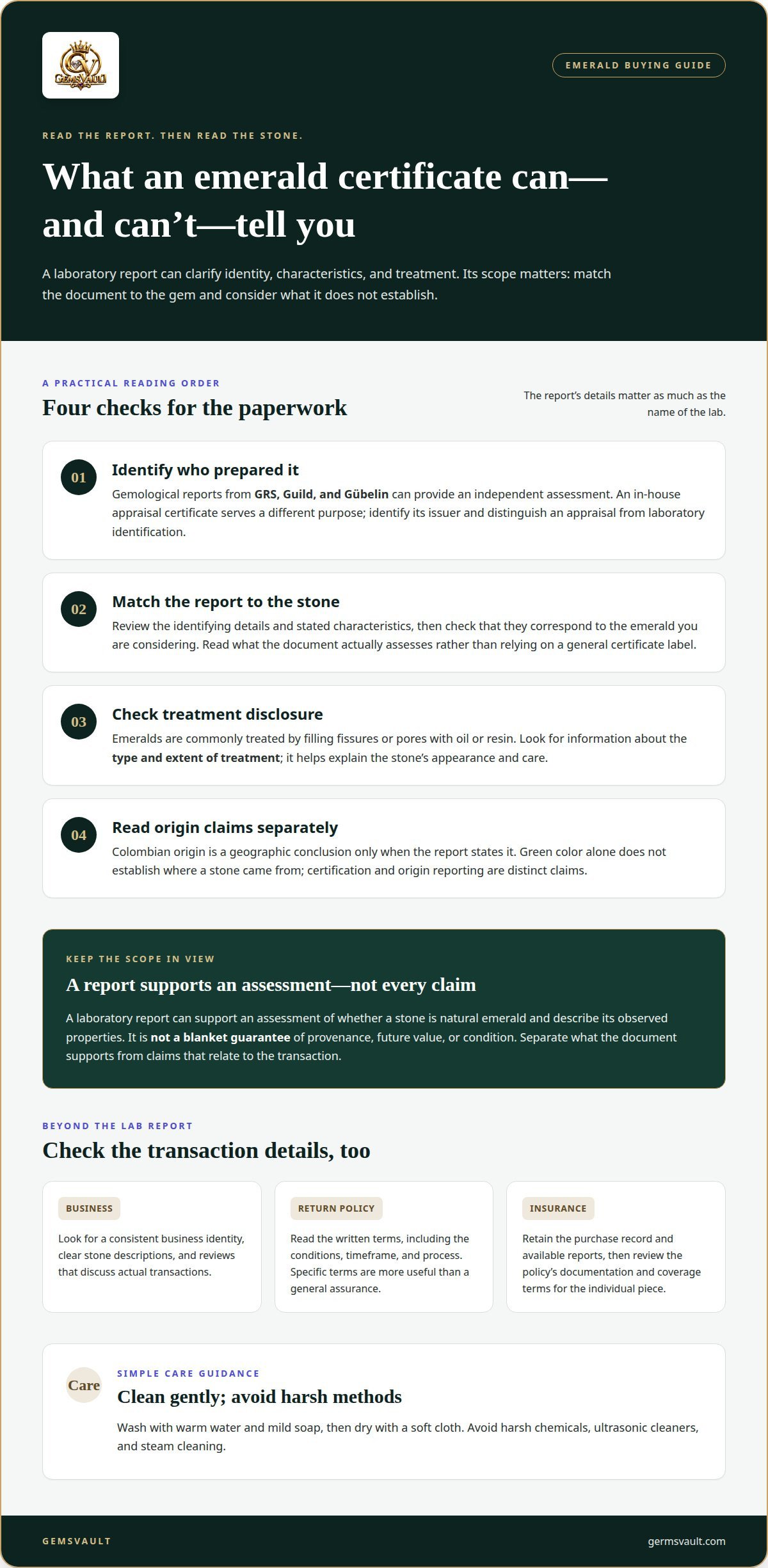
Gemological reports from GRS, Guild, and Gübelin can provide an independent assessment of an emerald. Review the report for the stone’s identifying details, stated characteristics, and any treatment information. Then match those details to the piece you are considering.
Traceability depends on what the report records. Colombian origin, for example, is a geographic conclusion only when the report states it; green color alone does not establish where a stone came from. Certification and origin reporting are distinct, so consider each claim separately.
Authenticity and Seller Assurances
A laboratory report supports an assessment of whether a stone is natural emerald and describes its observed properties. It is not a blanket guarantee of every claim about provenance, future value, or condition. Read which claims the document supports and which relate to the transaction.
An in-house appraisal certificate serves a different purpose from an independent gemological report. It may record an appraisal or the seller’s description, but the issuer matters. Read the document’s wording, identify who prepared it, and distinguish an appraisal from laboratory identification.
Emeralds are commonly treated by filling fissures or pores with oil or resin. Disclosure of the type and extent of treatment helps explain a stone’s appearance and care. A report that mentions treatment gives a more complete picture than a description focused only on green color.
To assess a seller, look for a consistent business identity, clear stone descriptions, and reviews that discuss actual transactions. Read the written return policy before purchase, noting its conditions, timeframe, and process. Specific terms are more useful than a general assurance of satisfaction.
Care for an emerald by gently washing it with warm water and mild soap, then drying it with a soft cloth. Avoid harsh chemicals, ultrasonic cleaners, and steam cleaning. For insurance, retain the purchase record and any available reports, then review your policy’s documentation and coverage terms for the individual piece.
Emerald price and product examples
Emerald prices reflect more than carat weight. Color, clarity, cut, treatment, and the stone’s overall presentation all shape how its beauty is valued.
Emerald Prices by Carat Weight
Carat weight measures a gemstone’s weight, not its face-up dimensions. Two emeralds with the same weight can look different because their cuts and proportions vary. Larger stones may command more, but weight alone does not determine value.
Compare size alongside shape and measurements. An emerald cut, oval, or cushion distributes weight differently, affecting the visible area. Price comparisons are most meaningful when stones also have similar color, clarity, treatment, and cut quality.
Value Factors
Color influences how an emerald appears at a glance: richness, evenness, and vivid green color contribute to its appeal. Clarity matters too, though natural inclusions are common. Their prominence and position can affect the stone’s appearance and value.
Cut affects how color and light move through the gem, while carat weight describes its mass. Consider all four factors together rather than treating any single quality as decisive. For jewelry or engagement rings, a protective setting also shapes how the stone is presented and worn.
Listed examples show why carat weight alone cannot explain different prices. These are individual pieces, not a like-for-like comparison:
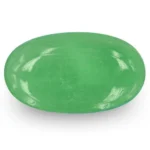
- A Colombia Emerald, 21.79 Carats, Medium Green Oval is listed at 2,300 USD per piece, as of 2026-11-02.
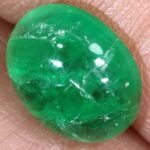
- A 2.00CTS AFGHANISTAN EMERALD CAB TBM-1114-trueblueminerals is listed at 750 USD per piece, as of 2026-11-02.
The distinct weights, origins, and descriptions prevent a direct price ranking. A guarantee concerns stated purchase terms; it doesn’t replace a careful assessment of the gem. For buyers seeking emeralds for sale, review the stone details alongside weight, color, clarity, and cut on GemsVault.
Loose natural emeralds for sale
In the United States, natural loose emeralds are sold through online gemstone marketplaces and jewelry retailers. A useful listing identifies the stone as natural and gives its shape, carat weight, measurements, and origin when known. These details help distinguish individual pieces before purchase, especially when viewing emeralds for sale online.
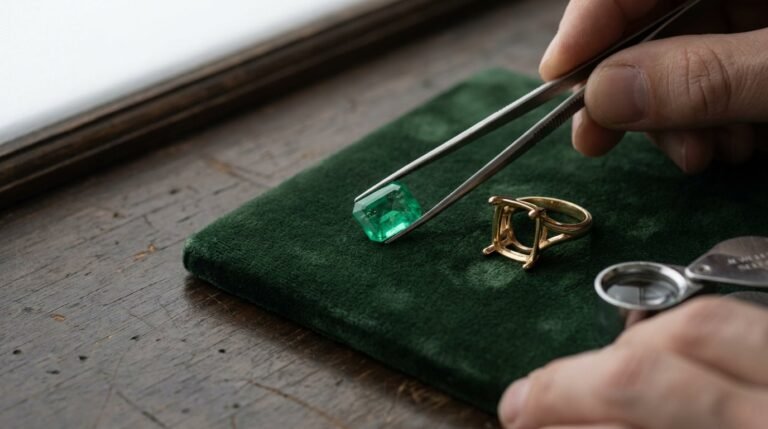
Start with the cut and dimensions. Round, emerald, and oval cuts appear in calibrated selections, where stones are chosen by measurements. Compare those measurements with the intended setting, since carat weight alone does not show how large a gem will look. A loose emerald lets the setting follow the stone’s proportions.
Origin can add context, but it does not determine quality by itself. Colombian emeralds are prized for rich green tones, while Zambian stones are valued for bluish-green color and often slightly stronger structure. Consider these distinctions alongside the individual stone’s appearance, rather than treating a country name as a complete assessment.
For an engagement ring, choose the stone and setting as a pair. Emeralds have internal features that can make them more vulnerable to damage from a hard blow. A protective setting can help shield exposed edges, while a custom design can accommodate the gem’s outline and dimensions. The wearer’s daily habits also matter when considering a ring design.
- Compare the listed measurements with the setting’s available space.
- Study the stone’s face-up color and visible inclusions in available images.
- Consider whether an oval or emerald cut suits the intended jewelry design.
An online selection can include varied origins, shapes, and sizes, but each stone remains individual. For a natural emerald, weigh its visible character against its intended use. A gem chosen for an engagement ring may call for different proportions than one selected for a pendant or collection.
Emerald clarity and inclusions
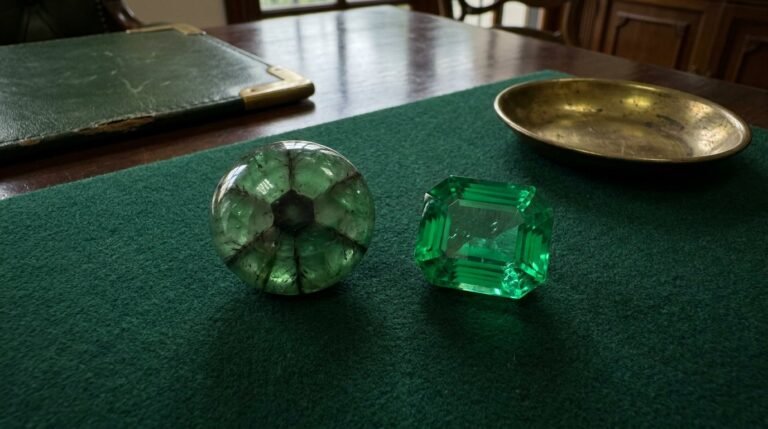
In an emerald, clarity describes the visibility, number, and placement of internal features. These inclusions are often called jardin, a French word for garden, because their delicate patterns can resemble foliage. Rather than treating every mark as a flaw, consider how the inclusions interact with the stone’s color, transparency, and overall appearance.
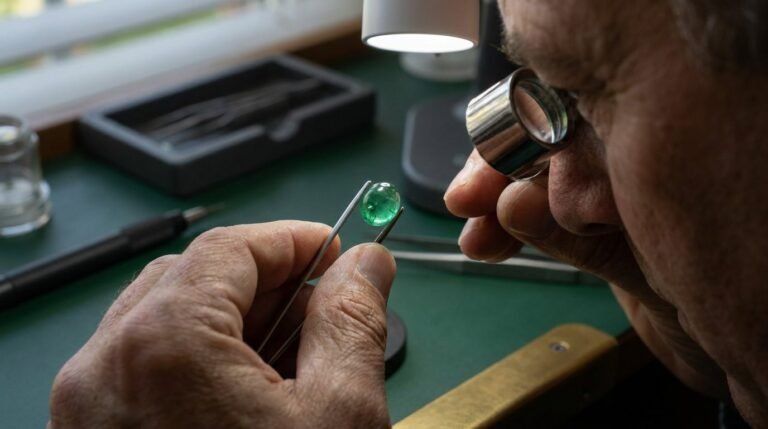
Look at each stone in steady light, then examine its face and edges. A prominent inclusion near the center may draw the eye, while finer features can contribute to an intricate character without dominating the view. Fewer or less prominent inclusions generally correspond with higher prices, but clarity is only one part of a considered assessment.
Emeralds are commonly treated by filling fissures or pores with oil or resin. This treatment can influence how inclusions appear, so disclosure of its type and extent helps describe the stone more fully. A gemological report can record treatment information; read its wording alongside the stone’s description rather than assuming every report covers the same details.
For a collection, assess each emerald on its own terms. Compare its visible inclusion pattern with its green color, cut, and intended use. A stone chosen for an open setting may reveal more of its interior than one framed by a protective design. In an engagement ring, the setting also affects how exposed edges meet daily contact.
Diamonds are often judged by a different visual ideal, so do not expect an emerald to resemble a nearly featureless stone. Its jardin can be part of its natural identity, not a defect that erases its beauty. The appeal lies in the balance: understand inclusions in context, while keeping color and overall appearance central to your decision.
The seller includes detailed valuation reports with its custom jewellery design services.
GemsVault: Emeralds
GemsVault offers emeralds for readers seeking a natural stone for personal selection, jewelry design, or a growing collection. Consider the qualities discussed here, including color, clarity, cut, carat weight, and disclosed treatments, as you decide what suits your purpose.
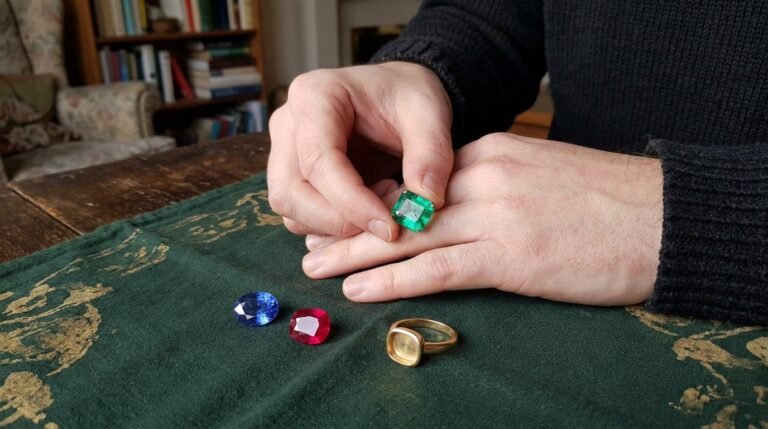
GemsVault’s curated gemstones also include sapphires, rubies, and rare collector stones. Explore these distinctive natural gems alongside emeralds, whether you are choosing a stone for a design or adding to a collection.
When you’re ready to discuss your interest in emeralds, contact GemsVault.
Choose the Stone That Feels Distinctly Yours
The right emerald is not simply the one with the most uniform appearance. It is the stone whose character, presence, and intended setting align with what you value. As you consider emeralds for sale, decide which qualities matter most to you rather than relying on a single measure of desirability.
That discernment can also guide a wider exploration. GemsVault offers emeralds, sapphires, and rubies, each with its own color and character. Whether your attention remains with emeralds or turns toward another gem, a considered choice begins with the qualities you want to appreciate every day.
When you are ready to take the next step, contact GemsVault about emeralds. Let your interest guide the conversation, and move forward with confidence in the stone that speaks to your taste.
Frequently Asked Questions
What is the average price of emeralds per carat by quality and size?
Per-carat value depends on color, clarity, cut, treatment, origin, and carat weight. A larger stone does not automatically cost more per carat if its color is weak or inclusions are prominent. For a practical comparison, divide a listed stone’s total price by its carat weight, then compare it with stones of similar appearance, cut, and treatment.
How can I tell if an emerald is natural, lab-grown, or imitation?
A natural emerald formed in nature, while a lab-grown emerald was created under controlled conditions; an imitation merely resembles emerald and may use different material. Appearance alone cannot reliably distinguish these categories. A gemological report can identify the material, so compare its description with the specific stone and listing rather than relying on color or a brief label alone.
What certifications should I look for when buying an emerald?
Look for an independent gemological report that identifies the stone and describes its characteristics. GRS, Guild, and Gübelin are laboratories associated with emerald reports. Check the issuing laboratory, stone description, treatment details, and any stated origin. Match the identifying information to the listed piece, and distinguish a gemological report from an in-house appraisal, which serves a different purpose.
What are the differences between Colombian, Zambian, and Brazilian emeralds?
Colombian emeralds are prized for rich green tones, while Zambian stones are valued for bluish-green color and often slightly stronger structure. Brazil is also an emerald source, but origin alone does not establish a stone’s quality or appearance. Compare each gem’s actual color, clarity, cut, and report details; stones from the same country can still differ substantially.