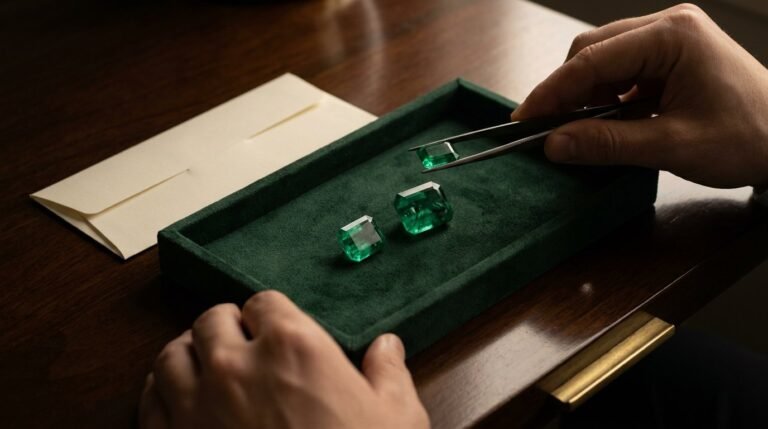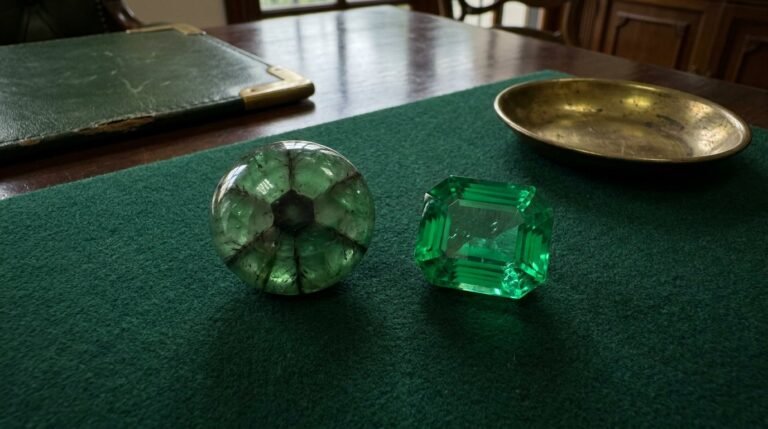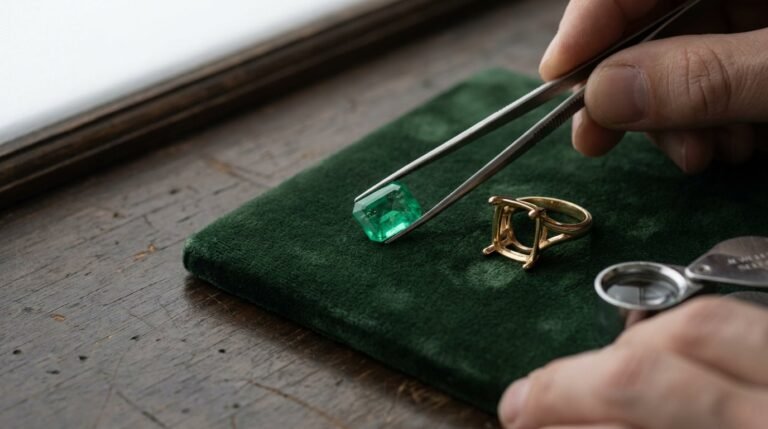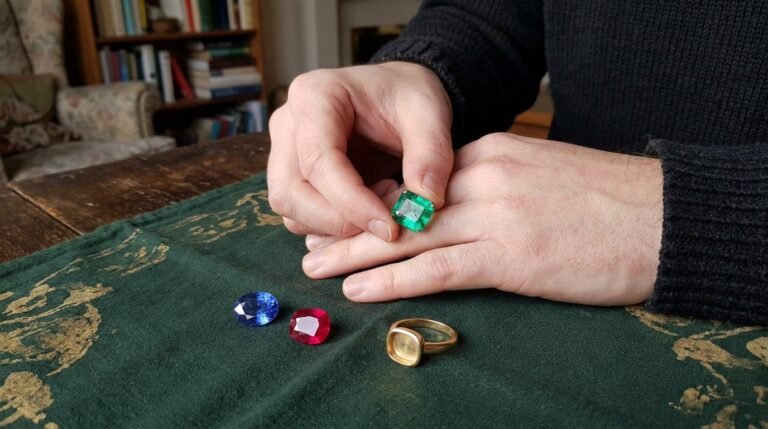

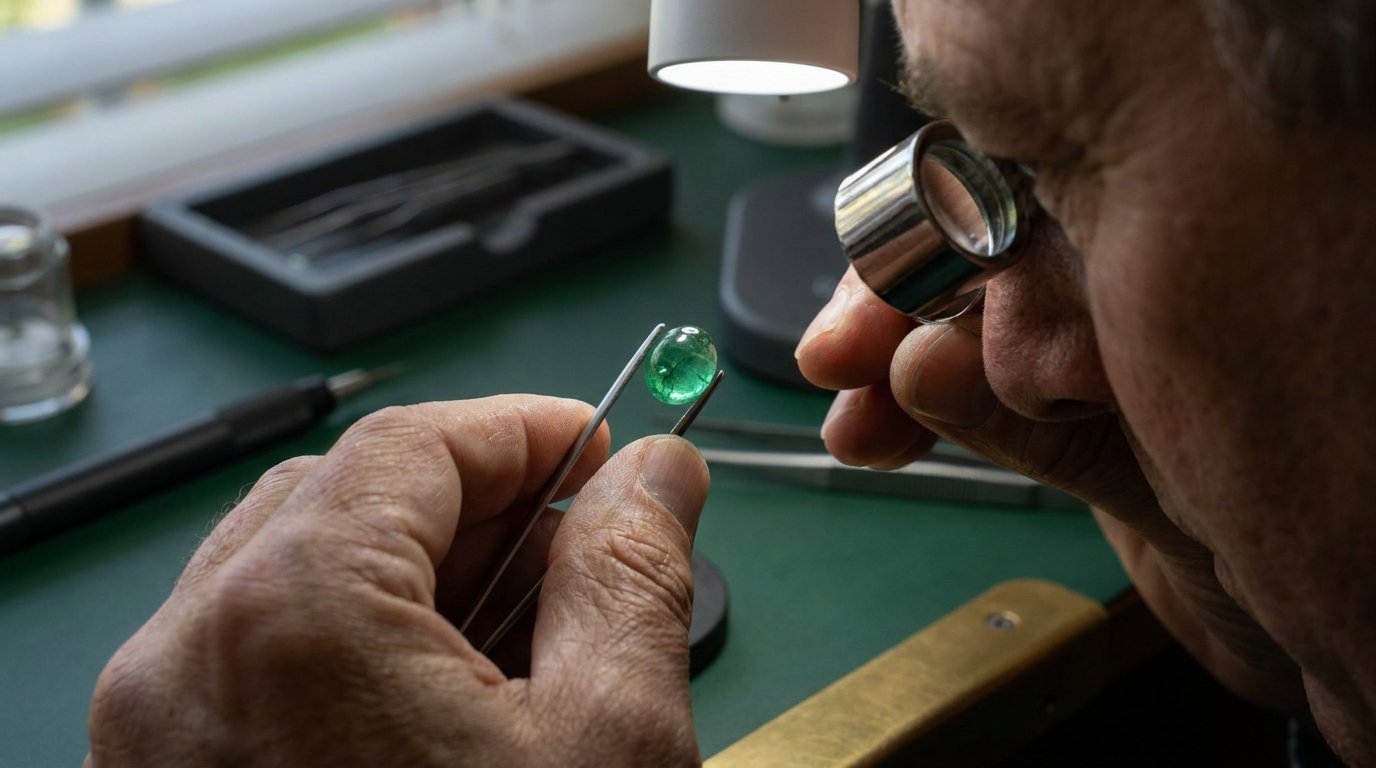

The emerald gemstone has a history reaching back to ancient Egypt: emerald mining in upper Egypt is recorded as early as 2000 BC, and Egyptian mines were known to exist by about 330 BC. Today, Colombia, Zambia, and Brazil are major sources. Its geological origin, however, is only part of what gives each stone its character.
That vivid green is often the first thing we notice, but inclusions and treatments also shape an emerald’s appearance and care. They aren’t simply flaws to overlook: considered carefully, they reveal important context about a stone’s natural features.
Explore how emeralds form and where they come from, what hue, tone, and saturation reveal, and how to care for these distinctive gems. This guide also explains the “jardin” of natural inclusions and clarity treatments, helping you compare emeralds with greater discernment.
Key Takeaways
- Trace an emerald’s geological origins to understand how its source contributes to its individuality.
- Assess color by considering hue, tone, and saturation together, rather than judging green by hue alone.
- Protect emeralds with gentle cleaning, and avoid ultrasonic cleaners and harsh chemicals.
- Learn how natural inclusions and clarity treatments affect an emerald’s appearance and the way it should be evaluated.
What are the origins of the emerald gemstone?
Emeralds are the green variety of beryl, colored by chromium. Their formation depends on geological conditions that bring the necessary elements together, while historic sources and individual stones give each gem a distinct story.
Geographic Origin Identification
Geographic origin identification is the assessment of a stone’s likely source through its gemological characteristics. Emerald mining in upper Egypt is recorded as early as 2000 BC, and Egyptian mines were known by about 330 BC. Today, Colombia, Zambia, and Brazil are major sources. For a collector, origin can add historical and geographical context, but it’s one part of appreciating a stone, alongside its color, inclusions, and cut.
Color Variation by Mine Origin
Color variation by mine origin describes the different appearances of emeralds from separate deposits. Their color ranges from bluish green to green, with chromium contributing to the green. Colombia, Zambia, and Brazil are recognized as major current sources, but origin alone doesn’t determine a stone’s exact shade. Compare stones side by side to notice which balance of hue and depth suits you.
Egypt’s ancient mines connect emeralds with a long history of human discovery, while modern sources give collectors a wider geographical range to explore. Each stone’s formation contributes to its character, and natural inclusions can create a garden-like pattern within the gem. These details are part of its individuality, but don’t replace an assessment of the whole stone.
Emerald, green tourmaline, and peridot are different minerals, even when their colors look similar. Emerald is beryl; tourmaline belongs to a separate mineral group, while peridot is a variety of olivine. Their distinct mineral identities help explain why green gemstones differ in appearance and character.
When choosing an emerald for a collection, decide whether you’re drawn to a particular source, shade of green, or distinctive inner garden of inclusions. Compare each stone’s color and character directly. Origin can guide your interest, but personal preference determines which example appeals most.
Emerald color: hue, tone, and saturation
Assess an emerald’s color through three qualities: hue, tone, and saturation. Hue describes its position from bluish green to green; tone describes how light or dark it appears. Saturation reflects the color’s strength. Considering all three gives you a more precise impression than calling a stone simply “green.”
Chromium contributes to emerald’s green color, while the visible result varies from stone to stone. Compare a bluish-green example with a greener one, then consider whether either looks pale, deep, vivid, or muted. These distinctions help you identify the color you prefer, without assuming one hue or origin alone determines quality.
Cut proportions also influence how color appears. A gem’s facets direct light through its body, so a shallow cut may look lighter, while a deeper appearance can make the color seem more concentrated. Examine the stone face up and at the edges; note whether the green looks even or shifts as the gem turns. This matters when choosing emerald jewelry, since the setting can frame the color differently.
Color and clarity work together to shape an emerald’s overall impression. Fractures and inclusions, sometimes forming a visible pattern, can interrupt the way light travels through its green body. Rather than judging color in isolation, observe how clearly the hue reads across the face and how inclusions affect its appearance. This gives you a more considered basis for comparing stones.
For a practical comparison, view stones under the same lighting and against a neutral background. First identify the hue, then judge tone, then compare saturation. This sequence keeps one vivid feature from overshadowing the others. A May birthstone chosen for personal jewelry may call for a different balance than a collector’s stone selected for distinctive color. Origin adds context, but your eye decides which combination appeals most.
How do I care for emeralds?
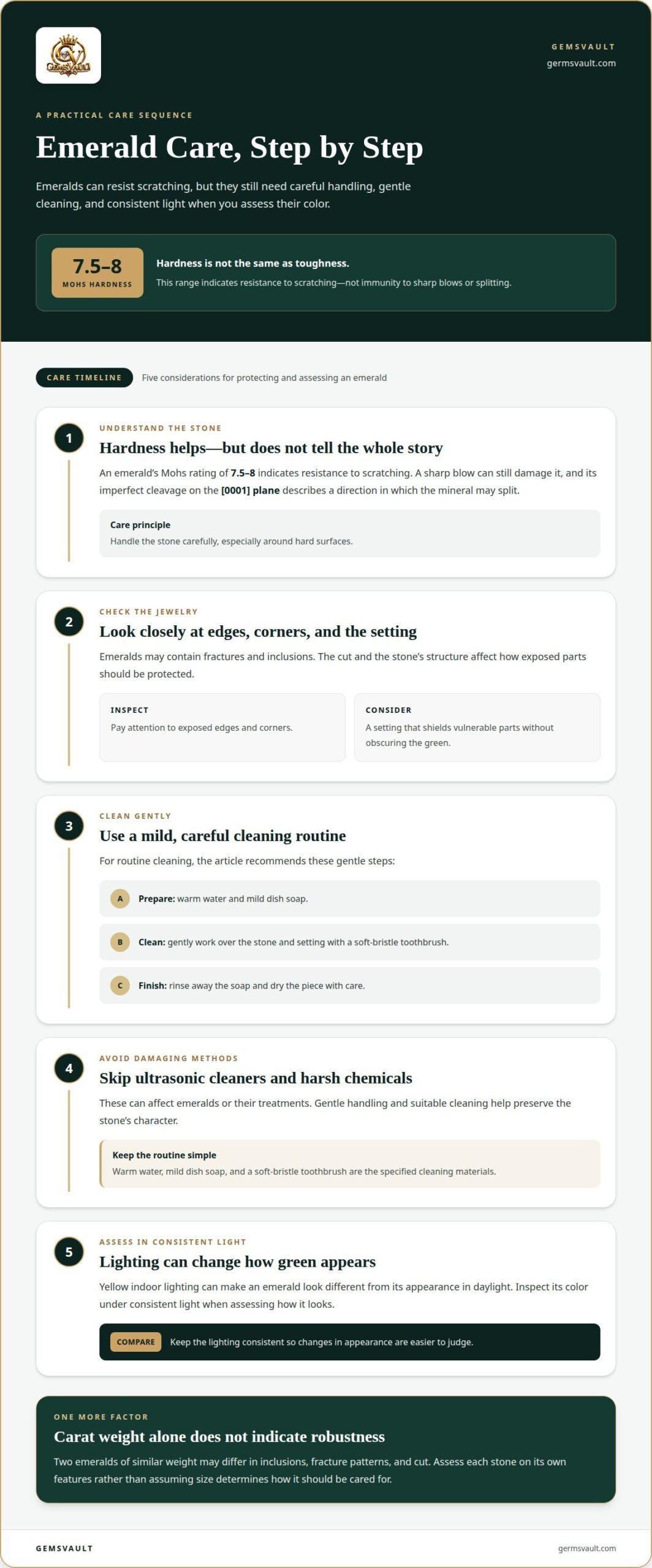
Emeralds measure 7.5-8 on the Mohs hardness scale, indicating resistance to scratching. Hardness, however, isn’t the same as toughness: an emerald can resist everyday abrasion yet remain vulnerable to a sharp blow. Its imperfect cleavage on the [0001] plane describes a direction in which the mineral may split. Handle the stone with care, especially around hard surfaces.
Cutting also calls for attention to durability. Emeralds may contain fractures and inclusions, so a cutter must consider how the stone’s structure responds to shaping. The finished cut can affect how well a setting protects exposed edges and corners. For jewelry, examine these areas and consider whether the setting shields vulnerable parts without obscuring the vivid green.
Carat weight alone doesn’t indicate how robust an emerald is. Two stones of similar weight may differ in inclusions, fracture patterns, and cut. A diamond may be harder, but that comparison doesn’t make emeralds indestructible or define their toughness. Assess each stone on its own features rather than assuming that a gem’s size determines how it should be cared for.
For routine cleaning, use warm water, mild dish soap, and a soft-bristle toothbrush. Work gently over the stone and setting, then rinse away soap and dry the piece with care. Avoid ultrasonic cleaners and harsh chemicals, which can affect emeralds or their treatments. Yellow indoor lighting can also make a green stone appear different from its look in daylight, so inspect its color under consistent light before cleaning or assessing its appearance. Gentle handling and suitable cleaning help preserve the character of an emerald over time.
Emerald inclusions and treatments
Inclusions are part of an emerald’s internal character, appearing as crystals, fissures, or fine patterns. Their garden-like appearance is a natural feature within the stone. The GIA classifies emeralds as Type 3 gemstones, a category described as almost always containing inclusions. For collectors, the useful distinction is not simply whether inclusions exist, but how they affect transparency, appearance, and durability.
Some emeralds are treated with oil or resin to fill fissures or pores. This clarity enhancement can make fissures less apparent, changing the stone’s appearance without removing its natural features. Treatment matters because stones with similar color and carat weight may differ in clarity enhancement. A filled fissure should not be mistaken for an absence of inclusions or a guarantee of greater durability.
For a structured assessment, the GIA Emerald Report classifies clarity enhancement as minor, moderate, or significant. These terms describe the degree of treatment and provide useful language for comparing stones. Consider the report alongside the gem itself: note where inclusions sit, how readily they catch the eye, and whether they interrupt the color across the face.
Brazilian origin, like any geographic origin, describes provenance rather than treatment. Origin alone doesn’t determine whether an emerald has been treated; clarity enhancement is a separate characteristic. Carat weight likewise cannot reveal how much oil or resin a stone contains. These distinctions keep an assessment grounded in the individual gem rather than assumptions about its size or source.
Before choosing an emerald for a setting, examine its inclusions and treatment information together. A setting can protect exposed edges, while the stone’s clarity and fissures remain relevant to handling and care. If you’re ready to compare natural emeralds with these details in mind, explore emeralds and consider which stone’s character suits your collection.
GemsVault: Emeralds
GemsVault offers emeralds for readers ready to move from learning about a stone to considering one for a collection. The qualities explored here, including color, inclusions, and treatment, can guide a thoughtful comparison. Decide which characteristics matter most to you, then explore emeralds alongside sapphires, rubies, and rare collector stones.
Whether you’re drawn to a distinctive green, a stone’s natural internal character, or its place among other collectible gems, let those preferences guide your next step. Contact GemsVault to continue exploring its gemstone collection.
Choose with a Collector’s Eye
Selecting an emerald gemstone is a personal act of discernment, shaped by what you value in a natural stone. Let your priorities guide the decision: perhaps you’re drawn to a particular visual character, or you’re building a collection around gems with individual presence. There’s no single standard of beauty to follow.
Take time to compare and reflect. The qualities that first catch your attention may become more meaningful as you consider how a stone fits your collection and daily life. Trusting your preferences while attending to each gem’s individuality brings intention to the process and makes the eventual choice distinctly yours.
For a next step, contact GemsVault with your emerald questions. A thoughtful collection begins with curiosity, and your next discovery can follow naturally from there.
Frequently Asked Questions
Are synthetic emeralds real emeralds?
Laboratory-created emeralds are emeralds, but they aren’t natural stones formed in the earth. The U.S. Federal Trade Commission’s rule, § 23.23(c), says a stone may be called laboratory-grown, laboratory-created, manufacturer-created, or synthetic with a natural stone’s name only if it has essentially the same optical, physical, and chemical properties. The label should make its laboratory origin clear.
What does an emerald ring symbolize?
An emerald ring is often chosen to represent love, renewal, or enduring connection, though its meaning depends on the wearer and occasion. A ring given for a personal milestone, for example, can hold private significance beyond traditional symbolism. Consider the recipient’s taste, preferred shade, and intended setting so the stone’s meaning feels personal rather than prescribed.
Are both natural and lab grown emeralds available?
Yes, natural and laboratory-grown emeralds exist. Natural stones form through geological processes, while laboratory-grown stones are created in controlled conditions and can share the essential properties described by the Federal Trade Commission’s labeling rule. The distinction is origin, not simply appearance. Clear identification helps you understand which kind you’re considering and choose according to your collecting priorities.
Are emeralds worth more than diamonds?
There’s no universal ranking: an emerald isn’t automatically worth more or less than a diamond. Value depends on the individual stone and the qualities buyers prize, including appearance, clarity, treatment, and rarity. Compare specific stones rather than gem names alone. A diamond’s size, color, and clarity also matter, so carat weight by itself can’t settle the question.
How should I clean my emerald jewelry?
Clean a piece over a soft cloth or a basin with the drain closed to reduce the chance of it slipping onto a hard surface. Pay attention to the setting as well as the stone, since grime can collect around prongs and beneath the gem. Dry the piece gently afterward and store it separately to limit contact with other jewelry.
How do I assess an emerald’s quality and value?
Assess an emerald by considering its face-up appearance, color consistency, visible inclusions, cut, treatment information, and carat weight together. Compare stones under the same lighting and check whether inclusions distract from the overall appearance. A report describing clarity enhancement adds useful context. Treat origin as one detail in the evaluation, not a substitute for examining the individual stone.