
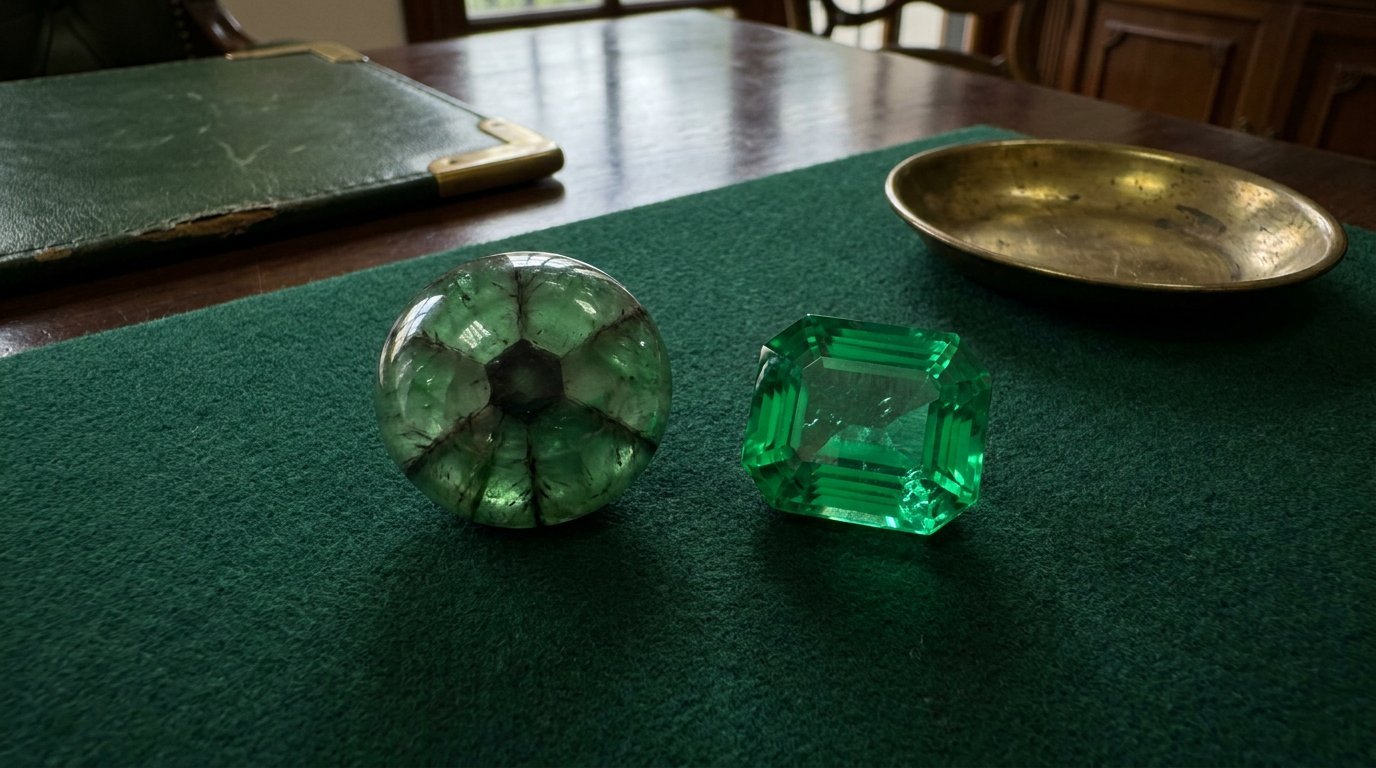

An emerald’s rarest distinction may be its pattern, not its size. A Trapiche emerald is recognized by dark, spoke-like lines that divide its green body into patterned sections, and fewer than 1 in 1,000 Colombian emeralds show this effect. This natural formation makes some rare emeralds remarkable for their structure as well as their color.
The appeal of Colombian emeralds is familiar to many admirers: vivid green color, distinctive character and a long association with fine gems. But origin alone does not explain what sets one stone apart. Trace elements influence color, while growth patterns, carat weight, treatments and laboratory documentation each provide different clues.
This guide explains how to distinguish Trapiche emeralds from other Colombian stones, what their inclusions reveal and why a higher carat weight does not automatically mean greater rarity or value. It also covers how treatment descriptions and laboratory reports clarify a stone’s identity, helping you look beyond first impressions and appreciate each emerald’s individual qualities.
Key Takeaways
- Learn how trace elements shape an emerald’s hue and help distinguish green beryl from emerald.
- Understand why Colombian origin adds context to a stone’s character but doesn’t, by itself, establish its quality.
- Compare carat weight with color, clarity and cut to assess a stone beyond its size alone.
- See how treatment disclosure and laboratory documentation can inform a more discerning evaluation.
Trace elements that determine emerald color
Chromium and vanadium contribute to emerald’s green color, while iron can shift its appearance. The balance of these elements, along with tone, saturation, transparency and cut, shapes how each gem looks.
Color, Tone, Saturation, and Transparency
Color describes the green hue, tone its lightness or darkness, and saturation its intensity. A balanced, vivid green with good transparency can show depth without looking too dark. Emeralds commonly contain inclusions, so assess transparency in the context of the stone’s natural internal features, rather than expecting flawless clarity. Cut proportions and orientation also affect how light returns through the stone, influencing its apparent brightness and color.
Color Variation by Source
Emerald color varies by source because geological conditions influence each stone’s trace-element composition. Colombian emeralds are often associated with rich green, while stones from Zambia can appear cooler and more bluish-green. These are broad tendencies, not a substitute for examining an individual gem. The Rockefeller Emerald, for example, is described as bluish-green with medium tone. Consider source alongside visible color to distinguish origin from quality.
Rare Emerald Colors and Varieties
Among distinctive varieties, Trapiche emeralds stand apart through a spoke-like pattern formed by dark lines across the crystal. Fewer than 1 in 1,000 Colombian emeralds show this pattern. It is a structural distinction rather than a separate green hue. Rare color descriptions also include bluish-green stones, such as the Rockefeller Emerald. Rarity can therefore refer to an unusual formation as well as an exceptional balance of hue, tone and saturation.
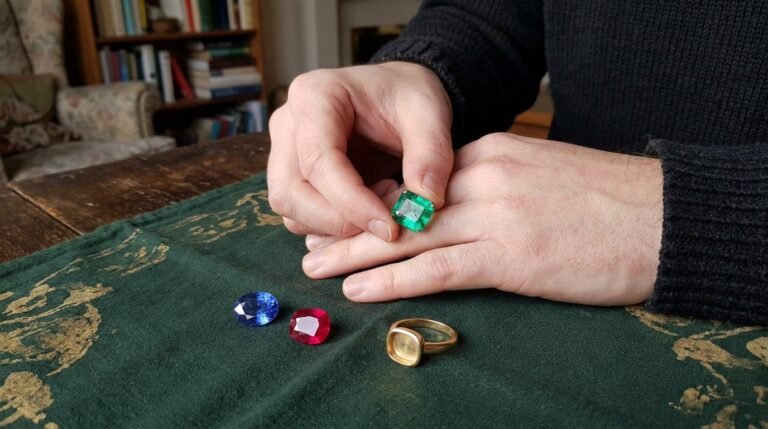
Emeralds, rubies and sapphires are colored gemstones with different mineral identities and characteristic colors. Emerald is green beryl; ruby and sapphire are varieties of corundum. Rarity depends on an individual stone’s color, clarity, size, origin and distinctive features, not on a universal ranking.
Notable emerald jewels have appeared at auction, including Elizabeth Taylor’s Bulgari pendant brooch, which sold in 2011, and the Stotesbury Emerald, sold in 2017. Catherine the Great’s Emerald Necklace also sold in Geneva in May 2019. These historic results show the collector interest attached to famous stones and their provenance.
Colombian emeralds as a quality label
Colombia supplies roughly 90% of all gem-quality emeralds, giving its origin particular prominence. Its emerald production also spans hundreds of years, linking modern stones with a long mining history. Yet “Colombian” identifies provenance, not a complete quality grade. Color, transparency, inclusions, cut and treatment still distinguish one stone from another. A Colombian origin can add context, but it cannot alone establish a stone’s beauty or rarity.
Colombia’s reputation is associated with mining districts including Muzo, Coscuez and Chivor. Almost all Trapiche emeralds come from Colombia, particularly these areas. That unusual variety demonstrates how geology can produce distinctive features within a single country of origin. Brazil and Zambia produce the remaining 10% of emeralds on the market, so origin also places a Colombian stone within a broader global picture.
Consider provenance alongside the stone itself. Start by observing its color and how evenly it appears across the gem. Then assess transparency and inclusions, which contribute to its visual character. Finally, examine the cut, since proportions affect how the emerald presents its color. This helps distinguish the significance of a famous origin from the qualities visible in an individual stone, whether it is intended for a collection or jewelry.
Colombian provenance can also contribute to a stone’s story, particularly when supported by consistent identification and documentation. A necklace or loose gemstone may carry a Colombian origin, but the label does not make every example identical. The rarest and most distinctive stones combine an identifiable origin with compelling individual characteristics. Treat the country name as one useful part of the description, then judge the emerald through its appearance, condition and documented details.
Emerald sizes and carat weights
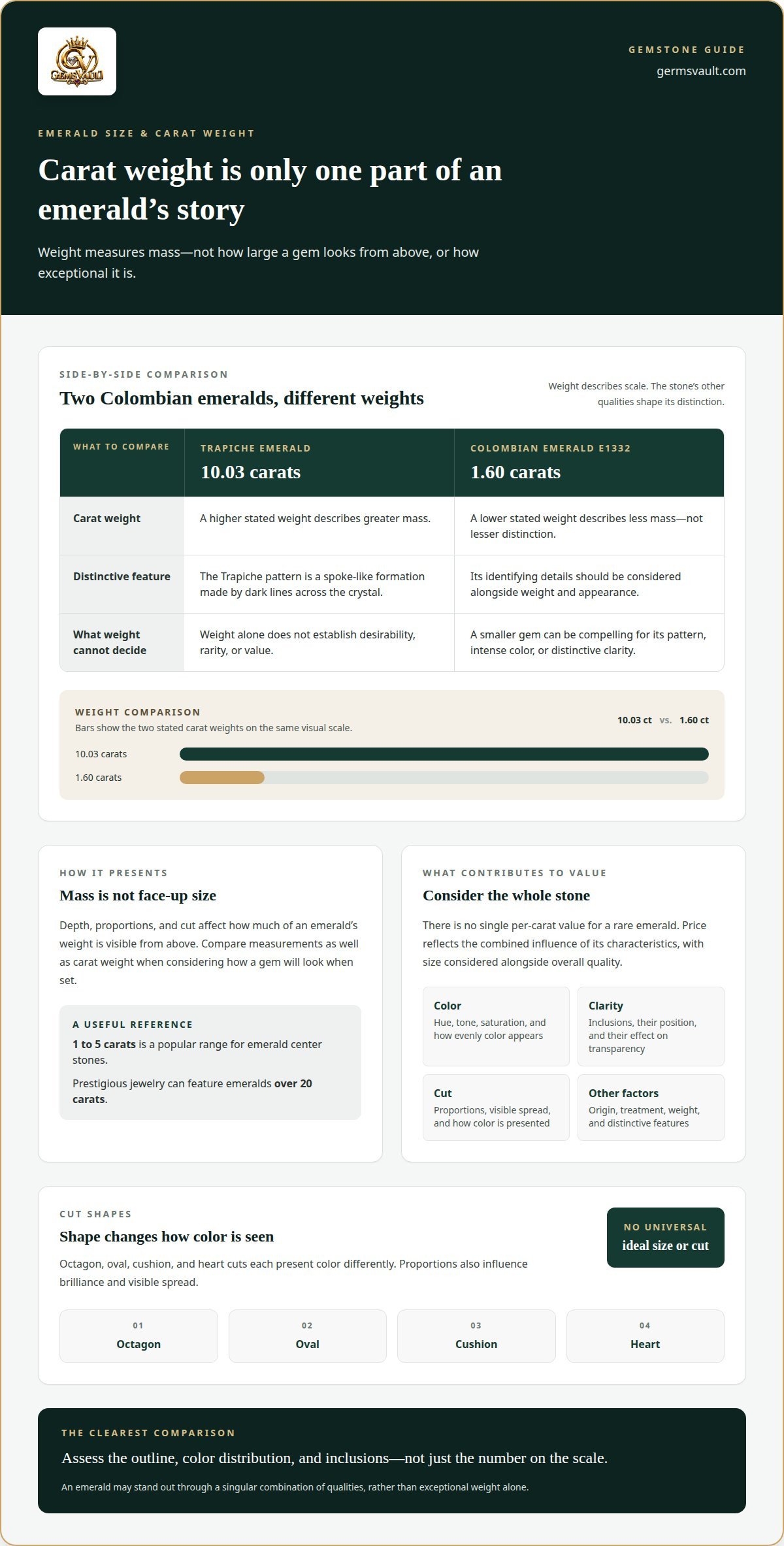
Carat weight measures mass, not the visible face-up size of an emerald. Depth, proportions and cut determine how much of that weight appears from above. Emeralds of 1 to 5 carats are popular as center stones, while prestigious jewelry can feature stones over 20 carats. Compare measurements as well as weight when assessing how a gem will look when set.
In 2026, a rare emerald has no single per-carat value. Its price reflects the combined influence of color, clarity, cut, origin, treatment and weight, with size weighed alongside the stone’s overall quality. A larger carat emerald may command greater interest, but carat weight alone doesn’t establish desirability or value.
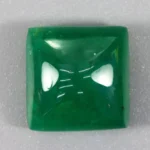
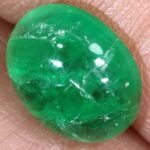
Consider the contrast between a 10.03-carat Trapiche emerald and a Colombian emerald identified as E1332, weighing 1.60 carats. Their different weights describe scale, not which is more exceptional. A Trapiche pattern, intense color or distinctive clarity can make a smaller stone compelling. Inclusions also matter: their visibility, position and effect on transparency shape the gem’s appearance.
Cut adds another layer of distinction. Octagon, oval, cushion and heart shapes each present color differently, while proportions influence brilliance and visible spread. There is no single rarest cut or ideal size: rarity depends on the combination of characteristics. To compare stones, assess the outline first, then check how evenly the color appears and whether inclusions interrupt the face-up view. An emerald may stand out for a singular combination of qualities, not exceptional weight alone.
There is no single rarest cut or ideal size. Octagon, oval, cushion and heart cuts each present color differently, and rarity depends on the combination of qualities. Distinctive clarity and inclusions whose position or visibility preserves transparency and an unobstructed face-up view can make an emerald especially compelling.
Emerald treatments and gem laboratory certificates
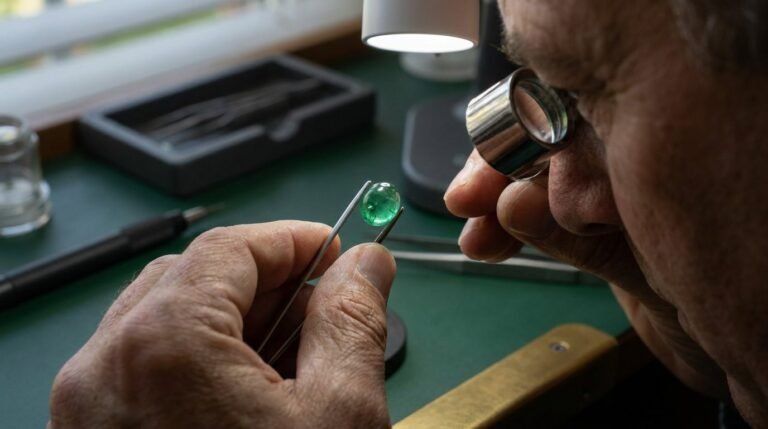
Inclusions are part of an emerald’s natural character, but they can affect transparency and perceived clarity. Oil treatment is used to improve apparent clarity by reducing the visibility of surface-reaching fissures. The market fact is striking: over 99% of emeralds are oiled to improve clarity. Treatment is therefore an important part of a stone’s description, not a minor detail to overlook when comparing two gems.
Ask what treatment a report identifies and how it is described. A laboratory’s assessment helps distinguish an untreated stone from one whose fissures have been filled. The GIA Laboratory began offering a service to classify emerald clarity treatments in early 2000. That history reflects the importance of clear treatment terminology when examining emeralds. The Rockefeller Emerald is described as having no treatment, a notable contrast with the prevalent use of oil.
Color and treatment should be considered separately. A bluish or bluish green appearance describes hue, while an oil treatment concerns clarity. Neither description replaces the other. A 14.02-carat Colombian emerald is listed as treated with oil, showing why weight, origin and treatment belong in the same careful assessment. Compare the report’s treatment wording with the visible inclusions, then consider how transparency affects the stone’s appearance.
A laboratory report for emeralds for sale can document a gemstone’s characteristics and treatment classification, supporting a more informed comparison. Read it as a description of the examined stone, not as a substitute for seeing the gem itself. For rare emeralds, a precise treatment record adds context to color and clarity, while inclusions remain part of each stone’s individual character.
Explore emeralds for your collection with treatment and clarity in mind, and compare each stone’s documented character with its appearance.
GemsVault: Emeralds
GemsVault offers emeralds for those drawn to Colombian origin, distinctive color or unusual natural patterns. The selection also includes sapphires, rubies and rare collector stones, so you can explore different gemstone characters side by side. When you are ready to look beyond an emerald’s name or carat weight, GemsVault’s gemstone selection lets you consider the qualities discussed here in light of your collecting interests.
Start with the details that matter most to you, whether color, origin, size or a distinctive feature. Explore GemsVault’s gemstones at your own pace, then contact GemsVault to continue your search.
Choose with a Collector’s Eye
The most rewarding choice is one that continues to hold meaning beyond the moment of discovery. Let your interests guide your comparison: perhaps a stone’s quiet individuality draws you in, or perhaps you are building a collection around a particular character. Rare emeralds invite personal discernment, bringing aesthetic pleasure together with informed appreciation. There is no single definition of distinction; the right choice is the one whose qualities suit your intentions.
GemsVault offers emeralds, sapphires and rubies for those considering a new addition or exploring another gemstone. Take the next step at your own pace, and contact GemsVault about emeralds. A thoughtful search can become the beginning of a collection shaped by curiosity, individual taste and lasting appreciation.
Frequently Asked Questions
What Is a Trapiche Emerald?
A Trapiche emerald is a distinctive variety with a spoke-like pattern across its green crystal. The dark pattern is associated with black carbon, while white or gray albite may form contrasting sections. Quartz or clay minerals can also occur. These features are geological formations within the gem, not a cut or applied surface design.
Where Are They Found?
Trapiche emeralds are found mainly in Colombia, especially around Muzo, Coscuez and Chivor. Their formation depends on particular geological and chemical conditions, helping explain the variety’s close association with Colombian deposits. For a stone described as Trapiche, a report identifying the variety and stating its origin provides useful context beyond appearance.
What makes an emerald rare?
Rarity can come from an unusual formation, distinctive color, notable clarity, size or documented provenance. Trapiche emeralds offer a clear example: fewer than 1 in 1,000 Colombian emeralds show the pattern. That scarcity describes the variety, not an automatic quality ranking. A collector should consider how a stone’s features work together, including whether its pattern, color and transparency are appealing.
Which countries produce the rarest emeralds?
Colombia is especially associated with rare Trapiche emeralds, while Brazil and Zambia also produce gem-quality stones. Country alone does not determine which emerald is rarest: unusual crystal patterns, color, clarity and documented origin also matter. Compare the stated source with the gem’s distinguishing characteristics instead of treating a country name as a complete assessment.
How rare are untreated emeralds compared with treated emeralds?
Untreated emeralds are uncommon compared with oiled stones: over 99% of emeralds are oiled to improve clarity. Treatment disclosure therefore matters when comparing examples that otherwise look similar. The GIA Laboratory began offering a service to classify emerald clarity treatments in early 2000. A laboratory’s treatment wording can help clarify whether oiling was identified and how the stone’s clarity was assessed.
How can buyers verify an emerald’s origin and treatment?
Use a gem laboratory report that explicitly records origin and treatment, then compare those details with the stone’s description. Origin and treatment are separate findings, so do not assume one confirms the other. Read the report carefully, including whether it identifies an origin or classifies clarity treatment. If the report does not address a detail, consider that point unanswered rather than inferring it.