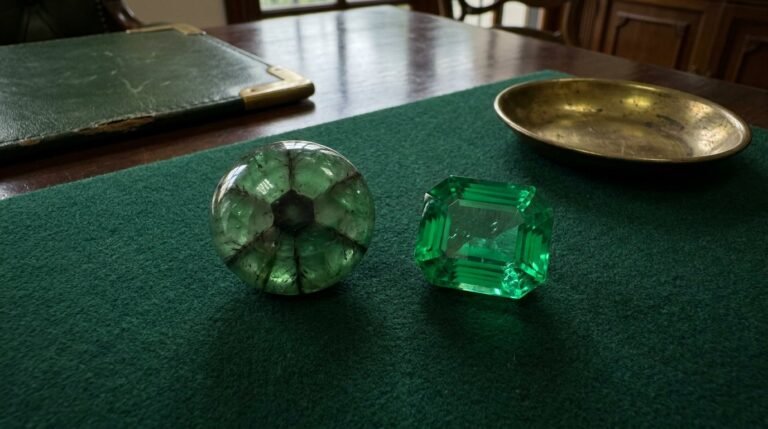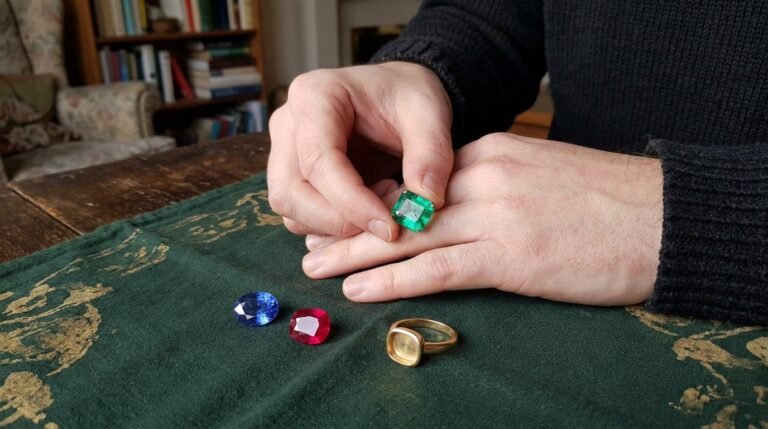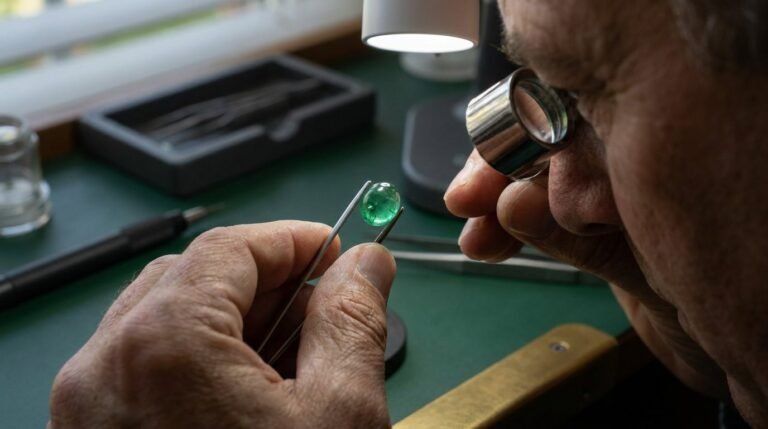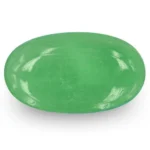

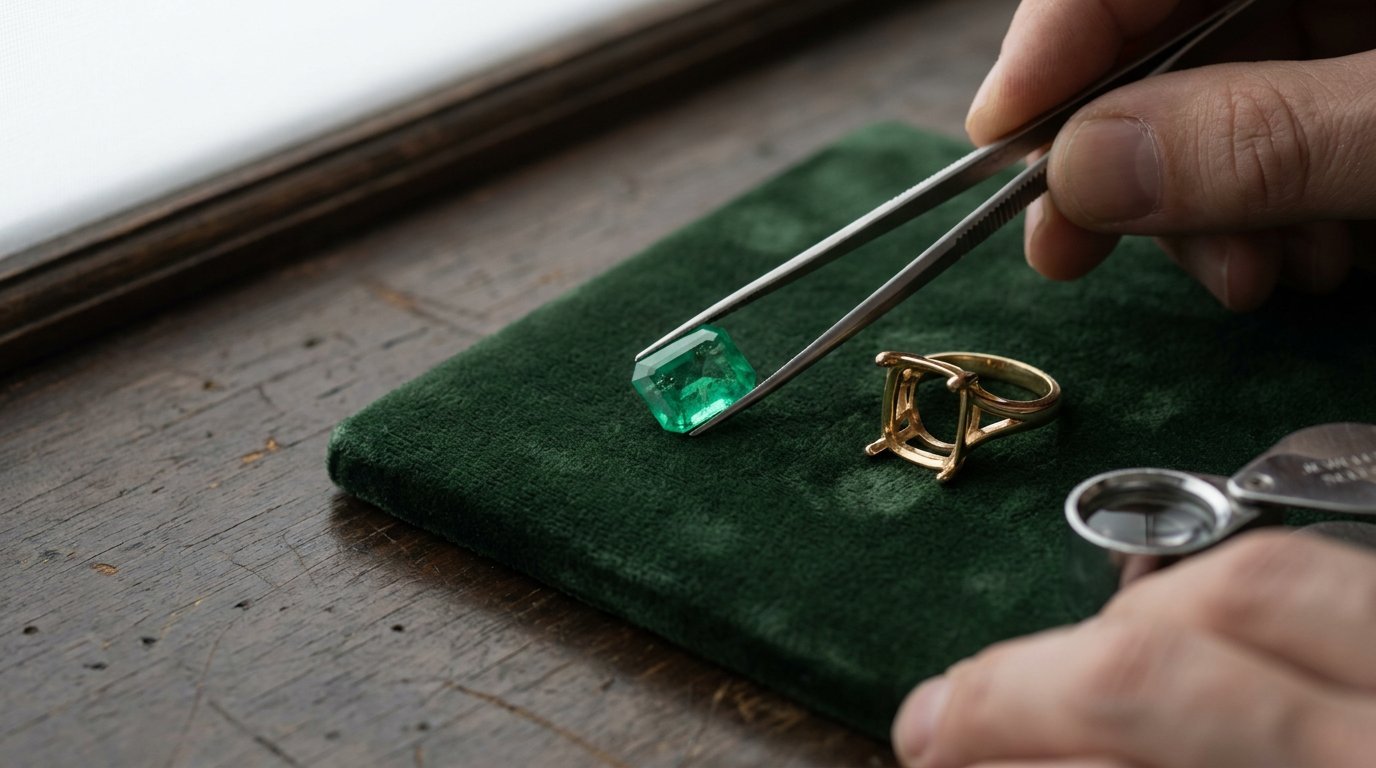

An emerald can be a distinctive choice for an engagement ring or everyday jewelry, provided it’s worn with care. With a hardness of around 7.5-8 on the Mohs scale, it can be worn daily, but harsh blows, chemicals, and cosmetics should be avoided. Choosing loose emeralds for jewelry means weighing their vivid character alongside their natural inclusions and treatment history.
The appeal of loose emeralds for jewelry is clear: each stone has its own depth of color and inner pattern, bringing individuality to a bespoke design. But emeralds need thoughtful setting and care, especially in a ring worn often.
This guide explains how emerald durability relates to everyday jewelry, what oil and resin treatments do, and how clarity enhancement can affect appearance. It also covers what to consider when choosing an emerald for an engagement ring or another piece intended for regular wear.
Key Takeaways
- Learn how color, clarity, cut, origin, and treatment work together to shape an emerald’s character.
- Explore how a stone’s shape and proportions can guide its fit in a bespoke ring or another piece of jewelry.
- Understand what clarity enhancement may mean for an emerald’s appearance and how to assess treatment information.
- Weigh an emerald’s distinctive beauty against the demands of daily wear before choosing a setting and care routine.
How durable are emeralds compared to other gemstones?
Emeralds sit in a distinct place among gemstones: their hardness is around 7.5-8 on the Mohs scale. Hardness describes resistance to scratching, but it doesn’t capture every risk of wear. Inclusions and fissures can make a stone more vulnerable to impact, so two emeralds with similar hardness may behave differently in a setting.
Chromium in the mineral beryl gives emerald its signature green. Natural colors range from yellowish to bluish green, with saturation and tone shaping the stone’s overall look. Zambia and Colombia are known origins for fine natural emeralds, but origin alone does not determine beauty. Compare each stone’s actual color and clarity in lighting similar to where you expect to wear it. For more on what distinguishes rare emeralds and Colombian stones, consider how growth patterns and inclusions contribute to a stone’s character.
Clarity varies from stone to stone. Natural emeralds often contain inclusions, sometimes called jardin, and their visibility can differ considerably. Rather than expecting a flawless appearance, consider whether inclusions distract from the color or affect the stone’s structure. Cut also shapes how color appears: an emerald cut, oval, pear, or cushion creates a different outline and pattern of light.
For example, a listed pear-cut emerald weighs 0.97 carats and measures 7.4 × 6.2 mm. This gives a useful reference for how weight and face-up dimensions differ. When choosing loose emeralds for jewelry, compare color first, then inspect visible inclusions and choose a cut that suits the design. Ask how fissures have been treated, since oil or resin may fill them.
Online photographs may not show how inclusions look in person, and treatment details or dimensions can be easy to miss. Before buying, review the images and description, then read the return policy for its deadline, condition requirements, and refund terms. These details help you assess your options if the emerald differs from its presentation.
Are emeralds a common choice for engagement rings or everyday jewelry?
Yes. Emeralds suit engagement rings and daily jewelry when their shape, scale, and setting work together. A listed emerald-cut stone weighs 0.34 carats and measures 5.1 × 3.1 mm, a compact example for a delicate design. For a more prominent look, a 7.02-carat octagon emerald measures 13.54 × 10.88 × 6.11 mm. Carat weight alone doesn’t show how large a stone appears; face-up measurements help compare its presence.
Shape affects both the design and the way a gemstone sits in a setting. Emerald cuts offer a stepped outline, while oval and pear shapes create softer, elongated profiles. A heart-cut emerald weighing 2.47 carats measures 10.2 × 9.4 mm, giving a clear example of a distinctive silhouette. Match the outline to the ring’s proportions and the wearer’s preferred style.
Matched pairs are useful for earrings, coordinated pieces, or designs requiring symmetry. A vivid green round pair weighs 1.80 carats total and measures 6.0 mm. A genuine pear-cut pair weighs 0.66 carats and measures 5.8 × 4 mm. Compare both stones’ color, size, and shape together; close visual balance matters more than identical character in every detail.
In the United States, you can find loose emeralds through online gemstone marketplaces and jewelry retailers. Compare listing photographs with the stated measurements and weight to understand a stone’s proportions before choosing a design.
Clean emerald jewelry gently with mild soap, lukewarm water, and a soft cloth. Avoid ultrasonic cleaners and harsh chemicals, which can affect treated stones.
For daily wear, consider how well the setting protects the emerald from knocks. A low-profile design can reduce exposure to accidental impacts, while the stone’s outline helps determine how the setting should support it. For a center stone or a matched pair, use measurements as well as carat weight to guide the design.
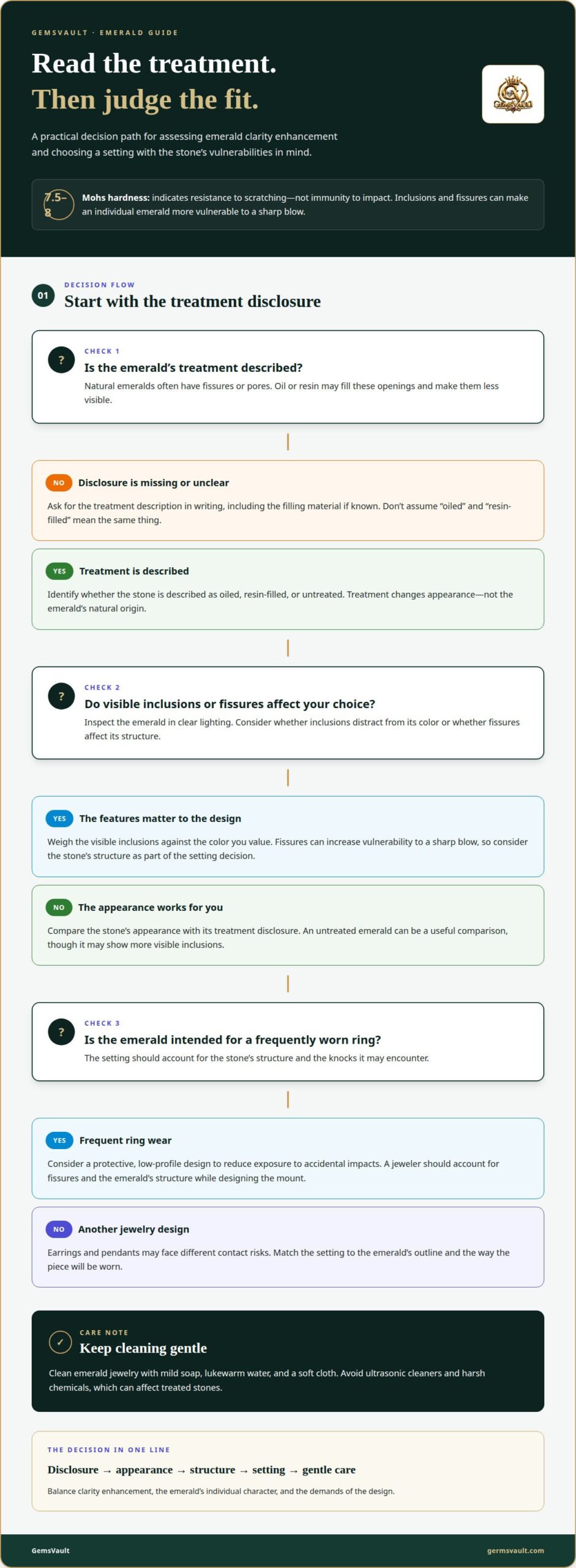
Emerald treatments and clarity enhancement
Natural emeralds often have fissures or pores that affect clarity. Oil or resin may be used to fill these openings and make them less visible. This enhancement changes the stone’s appearance, not its natural origin. Before choosing an emerald for an engagement ring, find out whether it has been treated, then weigh its color and visible inclusions. Treatment information lets you compare stones on equal terms.
Ask for the treatment description in writing, including the filling material if known. “Oiled” and “resin-filled” refer to different substances, so don’t treat the terms as interchangeable. An untreated emerald offers a useful comparison, but may show more visible inclusions. Consider how much clarity matters to your design, then compare the stone’s appearance with its treatment disclosure.
Hardness and cleavage describe different kinds of vulnerability. Emeralds measure around 7.5-8 on the Mohs scale, which indicates resistance to scratching. Cleavage refers to a tendency to split along internal planes; fissures can also make an emerald more vulnerable to a sharp blow. These qualities matter during setting, when pressure or impact could threaten a stone. A jeweler should account for the emerald’s structure while designing its mount.
Assess loose emeralds in sequence: read the treatment description, inspect the stone in clear lighting, then consider its intended setting. Look for visible fissures and note whether filling affects the areas most visible to you. In a frequently worn ring, a protective setting can reduce exposure to knocks, but it cannot remove internal features. Earrings and pendants may face different contact risks. A considered choice balances clarity enhancement, the emerald’s individual character, and the demands of the design.
Emerald durability and jewelry suitability
An emerald can work in daily jewelry when the design accounts for its vulnerabilities. Hardness does not make it immune to impact, and inclusions may affect how well an individual stone handles wear. For an engagement ring, consider the wearer’s routine alongside the emerald’s structure. A ring worn during hands-on work faces different risks from a pendant worn beneath clothing.
The setting also shapes the stone’s exposure. A protective design can shield more of its edges, while an exposed outline may leave them vulnerable to accidental blows. Consider how the emerald’s shape, visible fissures, and intended position affect the setting. The aim is to balance visibility with practical support, not conceal the stone’s character.
Daily care is part of choosing a suitable design. Remove emerald jewelry before activities likely to involve hard knocks, and keep it away from cosmetics and chemicals. These precautions are especially relevant for rings, which encounter surfaces more often than earrings or pendants. Handle a loose stone carefully during design and setting, as it has no surrounding jewelry for protection.
Choose a design based on how the piece will be worn. A ring intended for frequent wear needs secure support that suits the wearer’s habits. A pendant may experience less contact with objects, while earrings are less exposed to hand impacts. For any design, inspect the inclusions and edges before making your choice. An emerald’s suitability depends on its individual condition and the demands of its setting.
The practical takeaway is clear: emeralds can be worn daily, but thoughtful design and careful habits matter. If you’re considering a stone for a bespoke piece, explore natural emeralds with its intended use and setting in mind.
GemsVault: Emeralds
GemsVault offers emeralds for those choosing a natural stone for bespoke jewelry. Once you have considered durability, inclusions, and treatment, compare each stone’s color, visible character, and proportions with your design, especially for an engagement ring or a piece intended for frequent wear.
For a different direction, GemsVault also offers sapphires, rubies, and rare collector stones. These selections may suit a design shaped by another color or a distinctive gemstone. Keeping your intended setting and daily habits in mind can help bring the choice into focus.
Explore GemsVault’s emeralds to find a stone suited to your design.
Let Your Design Take Shape
Picture the finished piece: its silhouette, how it will be worn, and the qualities you want it to express. Choosing loose emeralds for jewelry is more purposeful when you consider the stone and design together. A bespoke piece can begin with a particular emerald, with its individual character guiding the final form.
GemsVault offers emeralds, sapphires, and rubies for those considering natural gemstones with distinct colors and character. Let your preferred color and design guide your selection, whether you’re creating a personal piece or choosing a meaningful gift. Look for a stone that suits your taste and the way you plan to wear it.
Contact GemsVault about loose emeralds as you shape your design. A thoughtful choice can be the beginning of a piece that feels unmistakably yours.
Frequently Asked Questions
What certification or assurances should I request when buying natural loose emeralds?
Ask for an independent gemological report that identifies the stone and describes any detected treatment. Match the report’s identifying details to the exact emerald in the listing. For an online purchase, read the written return terms and note the condition required for a return. Keep the report with your transaction records.
What should I look for when choosing loose emeralds?
Start with the finished design, then choose a stone whose proportions suit its setting. Compare measurements, not just carat weight, and consider how the outline will sit with the jewelry’s other elements. For a custom piece, share the stone’s dimensions with the designer before finalizing the setting. This helps align the design with your chosen emerald.
Are treatments to emeralds acceptable when buying high-quality stones?
Yes, a treated emerald can still be natural and desirable. What matters is that the treatment is disclosed and suits your priorities. Clarity enhancement may make inclusions less apparent, while an untreated stone may show more of its natural internal features. Compare stones with their treatment descriptions in view, rather than judging appearance alone.
Have questions about Green Emerald Gemstones?
For green emerald gemstones, begin by deciding how the stone will be used, then compare individual options against that design. Consider the intended jewelry style, the emerald’s dimensions, and the visual character you prefer. GemsVault offers emeralds for jewelry designers, collectors, and gemstone enthusiasts. A clear description of your intended piece can help focus your selection.
What are the typical origins of high-quality loose emeralds?
Colombia and Zambia are recognized origins for top-quality natural emeralds. Origin provides useful context, but it does not replace an assessment of the individual stone. If origin matters to you, look for documentation linking the stated provenance to that specific emerald. Consider its appearance and treatment information too, rather than treating a country name as a quality grade.
What does “natural emeralds” mean and how is it different from synthetic or treated stones?
A natural emerald forms through geological processes, while a synthetic emerald is grown in a laboratory. Treatment is a separate distinction: it describes an alteration, such as filling fissures to improve apparent clarity. A treated emerald can still be natural. When comparing listings, distinguish the stone’s origin from any enhancement it has received.