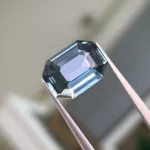

What Is a Sapphire Gemstone?
Sapphire is the gem variety of corundum that is not red. Corundum is aluminium oxide, with the chemical formula Al₂O₃, and it is one of the hardest natural minerals, measuring 9 on the Mohs scale. Blue is the color most people associate with sapphire, but the broader sapphire family includes pink, yellow, orange, green, purple, violet, colorless and black stones, as well as unusual color-change material.
The distinction between ruby and sapphire is therefore mineralogical and color-based rather than a difference in basic chemical composition. Red corundum is ruby; corundum in other colors is generally described as sapphire. This is why a sapphire education should go beyond the phrase “blue gemstone.” A stone’s exact color can be one of its defining market characteristics.
GemsVault currently lists Sapphire as one of its major gemstone categories and describes it as corundum available in an extraordinary range of colors and valued for beauty and hardness. The current store also displays sapphire examples connected with Sri Lanka and Tanzania, providing a useful snapshot of the category’s geographic and visual diversity.
“Blue sapphire” describes a broad category, not a single quality level. Hue, tone, saturation, clarity, cut, carat weight, treatment, origin and documentation all contribute to how an individual sapphire should be understood.
Why Blue Sapphire Looks Blue
The visual identity of blue sapphire comes from its interaction with light and trace elements within the corundum crystal. Gemological research associates the characteristic blue of sapphire with iron and titanium working together in the crystal lattice. In scientific terms, the interaction can produce an intervalence charge-transfer absorption that removes parts of the visible spectrum and leaves the familiar blue appearance.
This helps explain why sapphire color is not simply “dark blue versus light blue.” The exact balance can move a stone toward violetish blue, greenish blue, grayish blue or other intermediate appearances. Saturation and tone also change the way the color is perceived. A stone can have a high blue component but still look too gray, too dark or insufficiently saturated for a particular buyer’s goals.
The most useful approach is to judge the stone itself rather than a country name or marketing adjective. Compare sapphires in neutral lighting, look at them face-up, and observe whether the color stays attractive across the stone rather than appearing strong only in one small zone.


What Determines Sapphire Quality?
Sapphire quality is not controlled by one universal formula. In professional gemology, color is typically the most influential factor, especially for blue sapphire. Clarity, cut and carat weight remain important, but they interact with color and with the specific sapphire variety. The same carat weight can describe stones with very different visual and commercial characteristics.
1. Color: the first thing to evaluate
For blue sapphire, desirable color commonly falls within a range of strong to vivid blue, with a balanced medium to medium-dark tone. The most valuable blue sapphires are often described as velvety blue to violetish blue, provided the color is not so dark that the gem loses brightness.
When comparing sapphires, separate hue, tone and saturation. Hue describes the basic color direction, tone describes how light or dark the stone appears, and saturation describes the strength of the color. A highly saturated stone is not automatically attractive if it is overly dark, while a lighter sapphire can be appealing when it retains brightness and pleasing color.
2. Clarity: inclusions are part of the natural story
Natural sapphires frequently contain inclusions. Tiny crystals, color zoning, needles, clouds and other internal features can help gemologists understand how the stone formed and whether it shows characteristics associated with a natural origin. Extremely high clarity can be rare in larger natural blue sapphires, although inclusion levels vary substantially from one stone to another.
Clarity becomes especially important when inclusions affect transparency, durability or the evenness of the face-up appearance. A buyer should therefore ask not simply “Is it included?” but “What are the inclusions, where are they located, and do they materially affect the stone?”
3. Cut: brilliance depends on geometry
A sapphire can have excellent color and still disappoint when poorly cut. Proportion, symmetry, polish and facet arrangement all influence how much light returns to the viewer. Uneven distribution of color, excessive depth, a visible window, or weak symmetry can reduce the visual impact of an otherwise attractive rough crystal.
Oval, cushion, round, pear, emerald-style and mixed cuts are all used for sapphire. There is no single shape that is automatically superior. The right cut is the one that presents the particular rough material effectively while preserving attractive color, brightness and face-up proportions.
4. Carat weight: size must be viewed in context
Carat measures weight, not beauty. A large sapphire with weak color can be less desirable than a smaller sapphire with strong saturation, good clarity and a lively cut. In addition, large natural blue sapphires are less common than small commercial stones, so size can become more meaningful when quality is held relatively constant.
| Factor | What to evaluate |
|---|---|
| Color | Hue, tone, saturation, brightness and color zoning. |
| Clarity | Type, position and effect of inclusions on transparency, beauty and durability. |
| Cut | Proportions, symmetry, polish, windowing, brilliance and face-up color. |
| Carat Weight | Weight and physical dimensions, considered alongside quality and rarity. |
| Treatment | Heat, lattice diffusion, filling or other enhancement and how it is disclosed. |
| Origin | Geographic provenance, when supported by appropriate independent evidence. |
Sri Lankan, Tanzanian and Other Sapphire Origins
Origin is one of the most fascinating subjects in colored gemstones, but it is also one of the easiest places for a buyer to oversimplify. Sri Lanka, Kashmir, Myanmar, Madagascar, Tanzania and other regions have produced important sapphires, yet no country label can guarantee that every stone from that locality has superior color or clarity.
Independent laboratories can sometimes determine a geographic origin opinion by studying a gemstone’s inclusions, trace-element chemistry, spectroscopy and other characteristics. Even then, origin determination is an expert opinion with a defined level of confidence rather than a substitute for examining the stone’s actual quality.
Ceylon Sapphire
Sri Lanka is a historically important sapphire source and is associated with a broad range of blue and fancy-colored stones. Individual gems can vary widely in saturation, tone, clarity and treatment status.
Tanzanian Sapphire
Tanzania produces sapphires in different colors and qualities. The current GemsVault shop snapshot includes a GIA-certified natural grayish-green sapphire from Tanzania, illustrating that sapphire is not limited to blue.
Historical Rarity
Fine Kashmiri blue sapphires are famous for intense, velvety color and rarity. Authenticity, provenance and independent documentation are especially significant in this segment of the market.
Modern Diversity
Madagascar and other producing regions contribute a wide range of blue and fancy sapphires. Modern supply demonstrates why origin and quality should be evaluated together rather than treated as interchangeable.
Sapphire Treatments: What Does Heat Treatment Mean?
Heat treatment is an accepted and very common sapphire treatment. It can improve color, alter clarity or produce a more desirable appearance. For buyers, the critical issue is not simply whether a sapphire has been heated, but what treatment was performed and whether the disclosure is clear.
Heat-treated sapphire remains natural sapphire when the underlying material is natural, but its treatment history is part of the stone’s identity and should be disclosed. In fine-quality sapphire, a laboratory report stating that no evidence of heat was detected can be meaningful because naturally unheated stones of strong quality can be less common.
Other processes deserve attention. Lattice diffusion can introduce color-causing elements into corundum and may produce vivid effects. Depending on the treatment, the induced color can be relatively shallow or more penetrating. Fracture filling and dyeing exist as well and require additional care and especially clear disclosure.
A treatment does not automatically make a sapphire undesirable. What matters is knowing the treatment, understanding how it affects rarity and market value, and matching the stone to your intended use and expectations.
Fancy Sapphires: Blue Is Only the Beginning
Fancy sapphires expand the category beyond traditional blue. Pink, purple, yellow, orange, green and colorless sapphires can have completely different visual personalities and market dynamics. Some stones show multiple hues or color zoning, while others display color change under different lighting conditions.
Padparadscha sapphire is a particularly notable category. The term generally refers to a delicate pinkish-orange to orangy-pink range and is associated with considerable collector interest. Because the boundaries of the term are closely scrutinized, laboratory documentation can be particularly valuable when a stone is represented specifically as padparadscha.
Color-change sapphire is another intriguing variety. Its appearance can shift under different light sources, and the degree and nature of the change become part of the stone’s identity. As with any unusual sapphire, the individual gem should be assessed directly rather than by relying only on a variety name.
Current GemsVault Sapphire Examples
The live GemsVault shop currently displays sapphire examples with different origins, colors, weights and documentation. Prices and availability can change, so the figures below are a catalogue snapshot rather than permanent market prices.
1.31 CTS Certified Sri Lankan Sapphire
Current shop listing described as a natural sapphire associated with Sri Lanka and presented under the Faceted format.
$750.00 at the time checked View live catalogue →3.58 Ct GIA Certified Good Quality Natural Grayish Green Sapphire
A current GemsVault listing showing the broader color range of sapphire beyond traditional blue.
$1,855.00 sale price when checked View live catalogue →Explore More Sapphire Styles
Use GemsVault’s live catalogue and category pages to compare available sapphire forms, colors, cuts and current stock.
Live availability varies Explore categories →A Practical Sapphire-Buying Checklist
A disciplined buying process helps prevent a beautiful photograph or promotional phrase from becoming the only basis for a purchase. Whether you are selecting a sapphire for jewelry, collecting loose stones or researching a rare gemstone, evaluate the stone in a consistent order.
How to Care for a Sapphire
Corundum’s hardness of 9 makes sapphire highly durable for rings, earrings, pendants and other jewelry that sees frequent wear. Sapphire also has good toughness and no cleavage, which contributes to its suitability for daily-use jewelry. Nevertheless, treatment status can change the safest cleaning method.
For untreated and many conventionally heat-treated sapphires, warm soapy water is a straightforward cleaning method. Ultrasonic or steam cleaning may be appropriate for some stones, but owners should be more cautious when a sapphire has been fracture-filled, dyed or otherwise treated in a way that is sensitive to heat, chemicals or vibration.
Store sapphire jewelry so that it does not scratch softer gems. Keep pieces separated in a lined compartment, and inspect prongs and settings periodically. A durable gemstone can still be damaged by a hard impact against an edge, and a damaged setting can place even a tough sapphire at risk of loss.
Before using aggressive cleaning equipment, confirm the stone’s treatment. When the treatment history is unknown, conservative cleaning and professional inspection are safer than assuming every sapphire can be cleaned identically.
Natural Sapphire vs. Laboratory-Grown Sapphire
Natural sapphire forms through geological processes, while laboratory-grown sapphire is produced under controlled conditions. Both can share essentially the same chemical composition and many of the same physical properties. The distinction is therefore one of origin and formation rather than simply “real versus fake.”
For a buyer, the important issue is transparent disclosure. A natural sapphire should be represented as natural, while a laboratory-grown sapphire should be disclosed accordingly. Some stones are also sold as imitations made from materials that do not have sapphire’s corundum composition. Independent laboratory testing can be useful when identity or origin is critical.
Frequently Asked Questions About Sapphire Gemstones
Is sapphire only blue?
No. Sapphire includes many colors of corundum other than ruby-red, including pink, yellow, orange, green, purple, violet, colorless and black material.
Is sapphire harder than most gemstones?
Yes. Sapphire has a Mohs hardness of 9, which makes it one of the hardest natural gemstones and a practical option for many forms of jewelry.
What is the most important quality factor for blue sapphire?
Color generally has the greatest influence on the value and visual appeal of blue sapphire, with strong to vivid saturation and a balanced tone being important characteristics.
Are heated sapphires natural?
A natural sapphire can be heat-treated to improve its appearance. Heat treatment is a recognized enhancement, and disclosure of treatment is important when describing and pricing the stone.
What is a padparadscha sapphire?
Padparadscha is a trade and laboratory-used term associated with a rare pinkish-orange to orangy-pink sapphire color range. Because the term is closely defined and debated, independent documentation is valuable for important purchases.
Are Sri Lankan sapphires good?
Sri Lanka is an important sapphire source, but no origin automatically guarantees quality. Evaluate the individual stone’s color, clarity, cut, treatment and documentation.
Should I buy a sapphire with a laboratory report?
Not every sapphire requires a report, but independent documentation can be particularly useful for higher-value, unusual, rare or treatment-sensitive stones.
Continue Exploring GemsVault
Sapphire is one part of a much broader gemstone landscape. The live GemsVault categories page currently presents more than 50 gemstone and collector categories, including sapphire, ruby, emerald, tourmaline, garnet, tanzanite, spinel, aquamarine, opal, topaz and many additional varieties and formats.
Further Reading & Gemological Resources
Independent gemological resources are useful when you need deeper information about identification, treatments, terminology and laboratory documentation.