
What Is a Ruby Gemstone?
Ruby is the red variety of the mineral corundum, whose chemical composition is aluminium oxide (Al₂O₃). Corundum itself can be colorless, but trace elements entering its crystal structure create the colors seen in gem-quality material. In ruby, chromium is the principal coloring element responsible for the characteristic red appearance. Corundum that is not red is generally classified as sapphire, making ruby and sapphire members of the same mineral species but distinct gem varieties.
According to the Gemological Institute of America, ruby has a Mohs hardness of 9, a refractive index around 1.762–1.770 and a specific gravity of about 4.00. That hardness places ruby among the most durable natural gemstones and explains why ruby is widely used for rings, earrings, bracelets, pendants and other jewelry intended for regular wear.
GemsVault currently includes Ruby among its major gemstone categories and describes it as the red variety of corundum, celebrated for saturated color and collector appeal. The same live category page currently presents a 1.06 Ct No-Heat Mozambique Ruby as a reference listing from GemRock Auctions. That marketplace listing is not presented here as GemsVault inventory; it is a live-market reference connected from GemsVault’s category education page.
A celebrated mining region does not automatically make every ruby from that region exceptional. Color, clarity, cut, treatment, size, documentation and the actual visual character of the stone must all be considered together.
Why Ruby Is Red
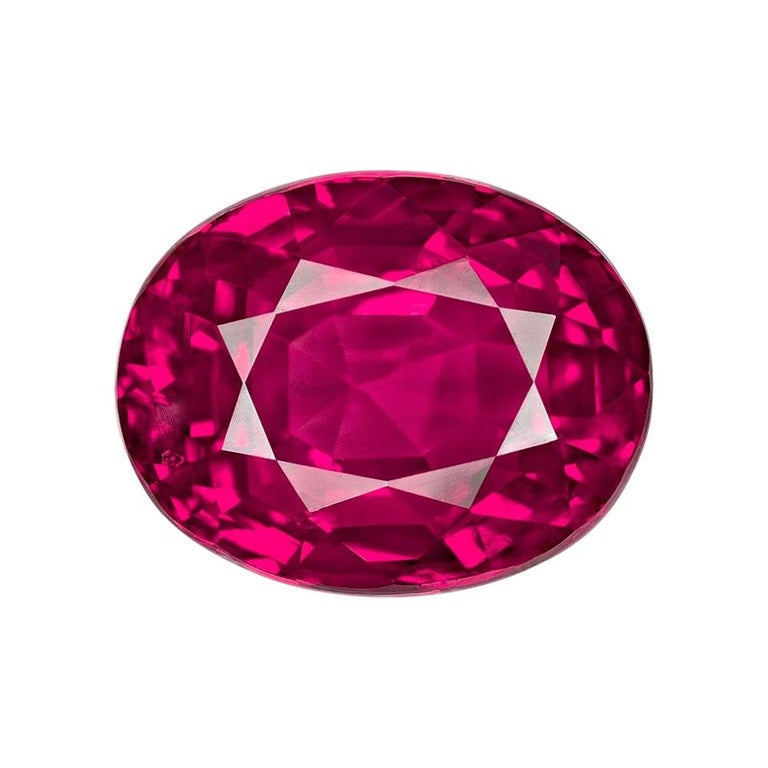
The most important visual feature of ruby is its red body color. Chromium atoms substituting for aluminium in the corundum structure influence the way the crystal absorbs light, creating the red appearance associated with ruby. The amount and behavior of chromium, together with the presence of other trace elements and structural features, can influence the exact hue, saturation and fluorescence of an individual stone.
Color is not merely a question of whether a gem looks “red.” Gemological descriptions can consider hue, tone and saturation. A ruby may lean slightly toward purple, pink or orange while remaining within the ruby category, depending on the standards being applied. Very dark or weakly saturated material can look less lively, while a bright and strongly saturated stone can display a more compelling visual presence.
Red fluorescence is another fascinating part of ruby’s optical identity. Chromium can produce red fluorescence when the stone is exposed to ultraviolet radiation, and in some natural-light conditions this fluorescence contributes to the stone’s visual glow. Fluorescence should be treated as a gemological characteristic rather than a standalone grading shortcut.

How Ruby Quality Is Evaluated
There is no single universal formula that converts every ruby into one objective quality score. Professional buyers typically examine several interacting characteristics. GIA describes color as the most significant quality factor for ruby, while clarity, cut and carat weight also influence appearance and market value. Treatment and geographic origin can become highly important, particularly for fine stones.
1. Color: the central quality factor
Fine ruby is generally associated with a pure, vivid red to slightly purplish-red appearance. Terms such as pigeon’s blood are used in the trade to evoke highly desirable red color, but such expressions should not replace a careful examination of the actual gem. Trade terminology can be interpreted differently, so a strong color description should be understood alongside the individual stone and any laboratory documentation.
2. Tone and saturation
Tone describes relative lightness or darkness, while saturation describes the strength or intensity of the color. The visual goal is often a ruby that feels strongly colored without becoming so dark that brilliance and internal life are lost. A gem can be technically red yet appear overly dark, brownish or muted in ordinary viewing.
3. Clarity and inclusions
Natural rubies commonly contain inclusions. Inclusions can provide important geological and identification information, and their presence does not by itself mean a stone is poor quality. The key questions are how the inclusions affect transparency, brilliance, durability and appearance when the gem is viewed face-up. Very clean natural rubies are unusual, particularly at larger sizes, so clarity needs to be considered in relation to the stone’s color and rarity.
4. Cut and proportions
Ruby is commonly fashioned using mixed cuts that balance brilliance, color retention and weight. A cutter may choose proportions that preserve attractive red color rather than maximize face-up dimensions alone. Symmetry, polish, windowing, extinction and the overall balance of the cut should be inspected carefully. An expensive ruby with a poor cut can look less vibrant than a well-proportioned stone of lower carat weight.
5. Carat weight and size
Carat is a measurement of mass, not a direct measurement of beauty or quality. Because fine ruby becomes rarer as size increases, large natural stones of strong color can command substantial premiums. A small ruby with outstanding color and minimal treatment can be more desirable than a much larger stone with weak color or extensive enhancement.
| Color | Usually the most influential visual and market factor; evaluate hue, tone and saturation together. |
|---|---|
| Clarity | Inclusions are common in natural ruby; judge their size, location, effect on transparency and impact on durability. |
| Cut | Proportions, symmetry and polish affect brightness, color distribution and face-up appearance. |
| Carat weight | Larger fine rubies are significantly rarer, but size should never be considered without color and quality. |
| Treatment | Heat and other enhancements can materially change appearance, rarity, care requirements and market value. |
| Origin | Geographic origin can matter in the market, especially for fine ruby, but origin alone does not determine quality. |
Ruby Origins: Mozambique, Myanmar, Sri Lanka, Tanzania & Beyond
Ruby occurs in several important geographic regions, and origin can become an important element in the valuation and documentation of exceptional stones. Well-known ruby sources include Myanmar, Mozambique, Sri Lanka, Tanzania, Madagascar, Vietnam, Afghanistan, Pakistan and historical deposits in Thailand and Cambodia. Modern mining has expanded the range of material available to the market, while laboratories use advanced testing to evaluate geographic origin where the evidence permits.
GIA emphasizes an important distinction: origin should not be confused with quality. A famous source can produce both outstanding and ordinary material. Conversely, newer or less famous sources can produce attractive stones with excellent color and gemological characteristics. The most responsible way to use origin information is to treat it as one part of the stone’s documented identity rather than as a substitute for examining the gem itself.
Mozambique
Mozambique has become an important modern ruby source. The current GemsVault Categories page references a 1.06 Ct no-heat Mozambique ruby from GemRock Auctions as a marketplace example.
Myanmar
Myanmar, historically including the Mogok region, is associated with some of the world’s most famous rubies. Origin documentation can be particularly significant for important stones.
Sri Lanka
Sri Lanka is an established gemstone-producing region with rubies and other corundum varieties. Color and quality still need to be evaluated stone by stone.
Tanzania & Madagascar
Both countries produce ruby material and illustrate the diversity of modern corundum sources. Their stones can vary substantially in color, clarity and treatment.
Ruby Treatments: What Buyers Need to Know
Most rubies in the market have been heat treated. Heat treatment is used to improve color and/or clarity, and it is a recognized practice when properly disclosed. A natural ruby can therefore be both natural and treated. The two concepts should not be confused: “natural” describes geological origin, while “heated” describes an enhancement process.
Other treatments can include diffusion or fracture filling. Lead-glass-filled rubies are a well-known treated material in which a filler reduces the visibility of surface-reaching fractures and increases apparent transparency. Such stones require especially careful disclosure because treatment can materially affect value and durability. GIA recommends asking for treatment information in writing and obtaining an independent laboratory report when the purchase warrants additional verification.
“Natural ruby” is not the same as “untreated ruby.” A natural ruby may have been heated, while an untreated ruby has no evidence of the relevant enhancement. For valuable purchases, ask exactly what the laboratory or seller is reporting.
Natural Ruby vs. Laboratory-Grown Ruby
Laboratory-grown ruby is manufactured under controlled conditions and has essentially the same chemical composition and principal physical properties as natural ruby. The key distinction is formation: natural ruby formed through geological processes, while laboratory-grown ruby was produced by people. Imitation materials are different again and may not have corundum’s chemical composition or physical properties.
A credible description should disclose whether the material is natural, laboratory-grown or an imitation. For significant purchases, an independent laboratory report can help establish species, natural or laboratory-grown status and detectable treatments.
A Live Market Reference: 1.06 Ct No-Heat Mozambique Ruby
The live GemsVault Categories page currently includes a marketplace reference for a 1.06 Ct No-Heat Mozambique Ruby listed through GemRock Auctions. The referenced listing describes the stone as natural ruby, Mozambique origin, 1.06 carats, cushion shape, faceted, no treatment and AIG certified. Its recorded dimensions are 5.93 × 5.48 × 3.53 mm. The listing is a useful illustration of how a serious ruby description brings together weight, shape, treatment, origin and certification rather than relying on color adjectives alone.
Reference note: the GemRock Auctions listing shown above is a third-party marketplace example linked from GemsVault’s live educational category page. Auction status and pricing can change, and this article does not represent that third-party listing as GemsVault inventory.
How to Buy a Ruby Responsibly
A responsible ruby purchase starts with clarity about what is being sold. Before comparing prices, identify the gem material, confirm whether the stone is natural or laboratory-grown, understand any treatments, and decide whether origin documentation matters for your intended use. When the stone is rare or expensive, independent documentation can be more important than a marketing description.
How to Care for a Ruby
Ruby’s hardness of 9 makes it well suited to jewelry, but hardness is only one part of durability. The stone can still chip under a sharp impact, and treatments can change how it should be cleaned. Untreated and many heat-treated rubies can generally be cleaned with warm soapy water and a soft brush.
More caution is appropriate for filled or otherwise treated stones. GIA specifically notes that fracture-filled, cavity-filled or dyed material should be cleaned conservatively rather than assuming that ultrasonic or steam cleaning is safe. When the treatment history is uncertain, gentle cleaning is preferable until the stone’s condition is professionally assessed.
Store ruby jewelry separately from softer gemstones to prevent scratching. For rings that are worn frequently, inspect the setting and prongs periodically. A durable ruby is still dependent on a secure mounting and sensible everyday handling.
When a ruby’s treatment history is unclear, do not assume that every cleaning method is appropriate. Confirm the treatment first or use a gentle cleaning method and seek professional advice.
Ruby as the July Birthstone
Ruby is traditionally recognized as the birthstone for July and is also associated with the 15th and 40th wedding anniversaries. The cultural history of ruby stretches across centuries and includes royal jewelry, talismans, ceremonial objects and modern fine jewelry. These historical associations add context, but a ruby’s gemological characteristics should still be assessed independently of its symbolism.
For a modern collector or jewelry buyer, the most useful balance is to appreciate ruby’s symbolism while also learning the technical language: corundum, chromium, hue, tone, saturation, inclusions, heat treatment, origin and laboratory identification. That vocabulary makes it easier to compare stones objectively.
Frequently Asked Questions About Ruby Gemstones
What is the difference between ruby and sapphire?
Ruby and sapphire are both varieties of corundum. In standard gemological usage, red corundum is called ruby, while other corundum colors are generally called sapphire.
What makes a ruby red?
Chromium is the main trace element responsible for ruby’s red color. Variations in the crystal and trace-element environment can influence the exact appearance.
Are most rubies heat treated?
Yes. GIA advises buyers to expect that most rubies have been heated. Heat treatment is a recognized enhancement, but it should be disclosed because treatment is important to understanding the stone.
Is an unheated ruby automatically better?
“Unheated” describes treatment status, not a universal overall quality grade. An unheated ruby can be rare and valuable, but color, clarity, cut, size, origin evidence and other characteristics still need to be considered.
Is a Burmese ruby always more valuable?
No. Origin alone does not determine quality. Fine material from a famous source can be exceptional, but rubies from the same source can vary widely, and other sources can also produce important stones.
What is a pigeon’s blood ruby?
“Pigeon’s blood” is a traditional trade expression associated with highly desirable red ruby color. Because terminology can be interpreted differently, buyers should focus on the actual color and relevant laboratory description rather than relying on the phrase alone.
Can ruby be worn every day?
Ruby’s Mohs hardness of 9 makes it a strong choice for regular-wear jewelry. The setting, treatment status and intended activity should still be considered, and direct impacts should be avoided.
Continue Exploring GemsVault
Ruby is only one part of the broader gemstone landscape presented by GemsVault. The live website currently groups more than 50 gemstone and collector categories, including sapphire, ruby, emerald, tourmaline, garnet, tanzanite, spinel, aquamarine, opal, topaz and additional gem, mineral and rough-material categories.
Further Reading & Gemological Resources
For important gemstone decisions, independent gemological education is valuable. These resources provide additional information about ruby identification, quality, treatment, origin and care.