

What Is an Emerald Gemstone?
Emerald is the green variety of beryl, the same mineral family that also includes aquamarine. The identity of an emerald therefore rests on both its mineral species and its characteristic green color. The Gemological Institute of America describes emerald as the bluish-green to green variety of beryl and notes that the most desirable colors tend toward bluish green to pure green with vivid saturation.
In the marketplace, the word emerald can cover stones with very different appearances. A gem may be light or dark, strongly saturated or softly colored, heavily included or comparatively transparent, polished as a faceted stone or offered in another form. Those differences matter because emerald value is not determined by a single feature.
GemsVault currently places Emerald among its principal gemstone categories and describes it as a green beryl valued for color, character, rarity and provenance. The live catalogue also features emerald examples associated with Zambia, Afghanistan and Colombia, showing how broad the category can be in actual inventory.
Not every green beryl is automatically treated as an emerald in professional practice. Color intensity, tone and saturation influence how the material is classified, and independent laboratory documentation is useful when identification or origin matters.
How Emerald Forms Its Signature Green
The appeal of emerald begins with color, but the science behind that color is equally interesting. Emerald is beryl colored by trace elements. Depending on the material and geological setting, chromium, vanadium or a combination of coloring influences can contribute to the characteristic green appearance.
Geology also explains why natural emeralds often look different from one another. Crystals grow within complex geological environments, and the surrounding fluids, minerals, pressure and temperature conditions can affect inclusions and internal features. Rather than expecting every natural emerald to look perfectly uniform, a collector should understand that natural variation is part of the gemstone’s story.
The result is a category where color and individuality frequently coexist. Two natural emeralds of the same carat weight can have substantially different visual character and market value because their hue, tone, saturation, transparency, inclusions, cut and provenance differ.


What Determines Emerald Quality?
Emerald is a useful reminder that traditional diamond-style thinking does not map perfectly onto every colored gemstone. The four familiar factors—color, clarity, cut and carat weight—still matter, but their relative importance is different. For emerald, color is usually the first place a knowledgeable buyer looks.
1. Color: the central quality factor
The most desirable emerald colors are generally bluish green to pure green, with vivid saturation and a tone that is not excessively dark. An emerald that appears strongly green, lively and well saturated can have greater desirability than a larger stone with weak or overly dark color.
Look at an emerald face-up in neutral lighting. Compare the stone at several angles rather than judging from one flash. A good evaluation considers hue (the basic green character), tone (how light or dark the green appears) and saturation (the strength and intensity of the color).
2. Clarity: the role of jardin
Most natural emeralds contain visible inclusions. In the trade, the internal inclusion pattern of an emerald is often described as a jardin, the French word for “garden.” These features may include fissures, clouds, crystals, needles, cavities and other mineral growth characteristics.
For that reason, “eye-clean” has a different meaning in emeralds than it does in some other gemstones. A buyer should not automatically reject every emerald with visible inclusions. Instead, assess whether the inclusions are acceptable for the stone’s intended use and whether they materially affect transparency, durability or appearance.
3. Cut: balancing color and light
The classic emerald cut is a rectangular step cut with clipped corners. Its broad, orderly facets can display emerald’s body color elegantly while reducing some of the visual distraction that may come from heavily patterned internal features.
However, emeralds are not limited to emerald cuts. Ovals, cushions, pears and other shapes can work beautifully. The most useful question is whether the cut presents the individual rough material attractively, with good proportions, symmetry, polish and a pleasing face-up appearance.
4. Carat weight: size is not the whole story
Carat is a measurement of weight, not a direct measurement of beauty or value. A larger emerald can be less desirable than a smaller emerald when the smaller stone has stronger color, better transparency, a more attractive cut, superior provenance or more favorable treatment information.
GIA also notes that emerald has a lower density than diamond, so a one-carat emerald can appear physically larger than a one-carat diamond. This is one reason shoppers should compare actual dimensions as well as carat weight.
| Factor | What to evaluate |
|---|---|
| Color | Hue, tone, saturation, evenness and overall visual life. |
| Clarity | Inclusions, transparency, fissures, cavities and whether clarity affects durability or beauty. |
| Cut | Shape, symmetry, proportions, polish, windowing and face-up presentation. |
| Carat | Weight together with millimeter dimensions, rarity and the overall quality profile. |
Colombian, Zambian and Afghan Emeralds: Why Origin Matters
Emerald origin can be fascinating, but it should be handled carefully. A geographic label is not a guarantee of quality. GIA emphasizes that individual mines can produce a wide range of qualities, so origin needs to be interpreted together with the stone’s actual color, clarity, treatment and laboratory evidence.
GemsVault’s current storefront highlights emerald examples associated with Zambia, Afghanistan and Colombia. These live listings demonstrate how origin becomes part of the story told about a gemstone, but a responsible buyer should avoid treating location as a substitute for examining the stone itself.
Zambian Emeralds
Zambian emeralds are widely traded and can show attractive green color with their own characteristic inclusion profiles. Evaluate each stone individually rather than assuming a fixed quality level from the country name alone.
Colombian Emeralds
Colombia has a long and famous emerald tradition. For high-value material, independent origin determination can add meaningful provenance when a respected laboratory has examined the stone.
Afghan Emeralds
Afghanistan is represented in the current GemsVault shop through an emerald cabochon listing. As with every origin, the individual gem’s color, clarity, treatment and documentation should guide the evaluation.
Origin is context, not a grade
Use origin to understand provenance and geological context, not as a shortcut for judging quality. The gem itself and credible documentation remain central.
Emerald Treatments: What Does Oiling Mean?
Treatment disclosure is one of the most important parts of buying an emerald. Fracture filling and oiling are widely discussed in emerald commerce because many natural emeralds contain fissures that can be made less apparent through treatment.
A treatment does not automatically mean that a gemstone is undesirable or “fake.” Instead, it changes how the stone should be described, priced, cared for and compared with another stone. A buyer should know exactly what has been disclosed and whether an independent laboratory report is available.
GIA explains that an emerald can be filled more than once and that its reports can quantify the amount of filling material present. For valuable stones, ask for documentation that identifies the gemstone and clearly states relevant treatment information.
A natural emerald may still have received an enhancement treatment. “Natural,” “untreated,” “heated,” “oiled,” and “fracture-filled” are not interchangeable descriptions. Check the listing and, for higher-value stones, review an independent laboratory report.
Natural Emerald vs. Lab-Grown Emerald
Natural emeralds form in the earth through geological processes. Laboratory-grown emeralds are created through controlled processes intended to reproduce the same essential emerald material. Both can be genuine emerald material, but they have different origins and should be clearly disclosed in commerce.
When comparing a natural emerald gemstone with a laboratory-grown example, ask four basic questions: What is the material? Where did it form? Has it been treated? What documentation supports the description? These questions are more useful than relying on visual appearance alone.
For significant purchases, independent gemological testing can help separate identification questions from marketing claims. GIA, IGI and other established laboratories publish educational resources on gemstone identification, treatments and laboratory reporting.
Current GemsVault Emerald Examples
The live shop currently displays several emerald listings. Prices and availability are changeable, so treat these as a catalogue snapshot rather than permanent price claims.
18.97 CT Emerald Mine Zambia 100% Natural Unheated Gem
Currently displayed by GemsVault as a natural, unheated Zambian emerald example.
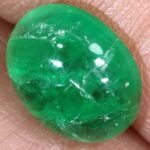
2.00CTS Afghanistan Emerald Cab
A current emerald cabochon listing associated with Afghanistan and displayed in the GemsVault shop.
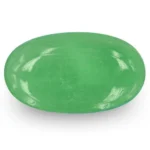
Colombia Emerald, 21.79 Carats, Medium Green Oval
A larger Colombian emerald example currently shown among GemsVault’s featured/trending listings.
Price note: these figures were visible on the live GemsVault storefront when this article was prepared and may change. Always verify the current product page, availability, treatment disclosure and final price before purchase.
A Practical Emerald-Buying Checklist
Whether you are purchasing a loose emerald for a collection, a gemstone for jewelry, or a larger collector stone, a disciplined checklist reduces avoidable surprises.
How to Care for an Emerald
Emerald deserves thoughtful handling. Its hardness is respectable, but its natural fissures and common treatment history mean it should not be treated exactly like every other gemstone.
For routine cleaning, gentle methods are the safest approach. Avoid aggressive chemicals, sudden temperature changes and careless mechanical cleaning. A soft cloth and mild soapy water can be appropriate for many emeralds, but a jeweler or gemologist should advise on stones with significant treatments, fractures or mounted settings.
Store emerald jewelry so that the stone does not rub directly against harder gems. When traveling, use individual pouches or compartments. If a piece is heavily worn or has a visible fissure near a vulnerable edge, professional inspection can be useful.
Know the treatment before choosing the cleaning method. Emerald care is most reliable when the stone’s specific condition—not a generic gemstone rule—is taken into account.
Frequently Asked Questions About Emerald Gemstones
Is emerald a natural gemstone?
Natural emerald is a naturally occurring green variety of beryl. The market also includes laboratory-grown emerald material, so listings should clearly disclose whether a stone is natural or lab-grown.
Why do emeralds often have inclusions?
Natural emerald formation commonly produces internal features and fissures. These inclusions are often visible and are part of the characteristic appearance of many emeralds; they should be evaluated in context.
What emerald color is most desirable?
Professional guides generally place strong emphasis on vivid green to bluish-green color with good saturation and a balanced tone. Desirability still depends on the complete quality profile of the stone.
Are Colombian emeralds always better than Zambian emeralds?
No simple origin rule can accurately grade every stone. Individual mines produce a range of qualities, and origin should be considered alongside color, clarity, treatment, transparency and independent documentation.
What is an emerald cut?
An emerald cut is a rectangular step cut with clipped corners. It is strongly associated with emeralds because it can showcase the stone’s body color through broad, orderly facets.
Are untreated emeralds rare?
Untreated natural emeralds can be valuable because many market examples receive treatments intended to reduce the visibility of fissures. The treatment status should be confirmed through clear disclosure and, where appropriate, laboratory reporting.
How can I buy an emerald gemstone responsibly?
Start with accurate identification, inspect color and clarity, confirm treatment, consider origin only with evidence, compare dimensions and read the seller’s policies. Higher-value stones can benefit from an independent laboratory report.
Continue Exploring GemsVault
Emerald is one part of a much larger gemstone landscape. The current GemsVault website presents a broad range of gemstone families and specialty formats, including sapphire, ruby, opal, tanzanite, tourmaline, topaz and garnet, alongside collector stones, rough material and cabochons.
Further Reading & Gemological Resources
These independent resources can help readers verify terminology, understand treatment and research gemstone identification.